
Pingdingshan Travel Guide 2026: Yaoshan Mountain, Giant Buddha & Itinerary
Pingdingshan Travel Guide
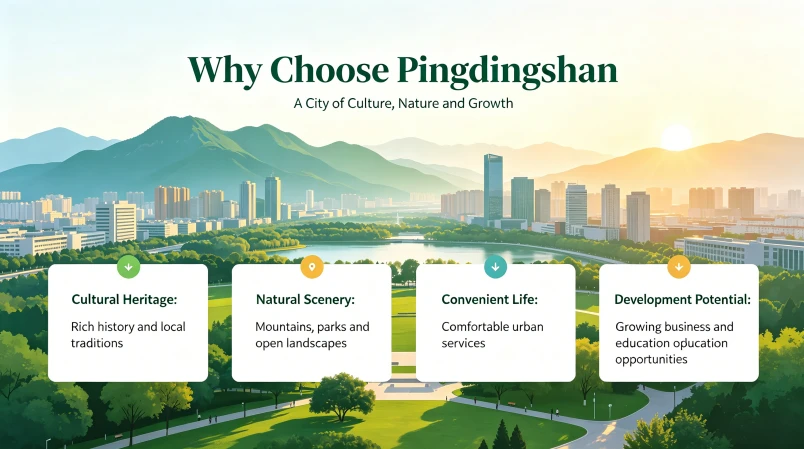
Pingdingshan, a city in central Henan Province, takes its name from the “flat peak” of a nearby mountain. It is an important city in the Central Plains Economic Zone. To the west, it borders the Funiu Mountains; to the east, the Huanghuai Plain. The city offers rich natural scenery and deep cultural heritage. Here you will find the 5A‑rated Yao Mountain (also known as Stone Man Mountain) with its spectacular peaks and waters, the Zhongyuan Buddha – the tallest Buddhist statue in the world – as well as the historic Xiangshan Temple and the famed Ru porcelain culture. For foreign travelers, Pingdingshan combines mountain scenery, Buddhist culture, and ceramic art into a meaningful journey. This guide provides complete information on transportation, attractions, itineraries, food, and accommodation.
Why Choose Pingdingshan?
The main attraction of Pingdingshan is Yao Mountain, a core part of the Funiu Mountain ecotourism area, known for its strange peaks, odd rocks, waterfalls, hot springs, and sea of clouds. In addition, the Zhongyuan Buddha stands 208 meters (682 feet) tall – the tallest Buddhist statue in the world – a truly awe‑inspiring sight. You can also visit Xiangshan Temple, which is regarded as the “ancestral home of Guanyin (Avalokiteshvara)” in Chinese Buddhism. Pingdingshan is also the birthplace of Ru porcelain, one of the five great ceramic wares of the Song dynasty, and you can see its kiln site at the Qingliang Temple Ru Kiln in Baofeng. Compared to other popular tourist cities in Henan, Pingdingshan has fewer visitors and lower travel costs, offering a more peaceful and authentic experience.
Best Time to Visit Pingdingshan
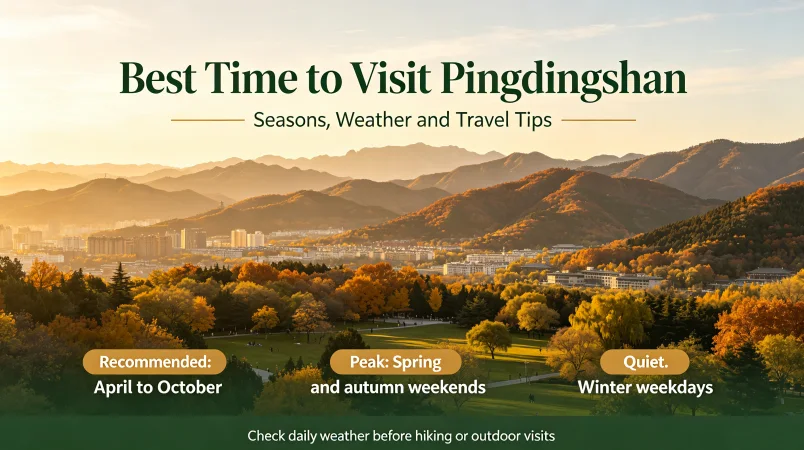
- Spring (April–May): Pleasant temperatures, Yao Mountain is covered with flowers, especially rhododendrons – good for hiking and sightseeing.
- Autumn (September–October): Clear skies, cool weather, Yao Mountain’s red leaves are at their peak – beautiful scenery.
- Summer (June–August): Yao Mountain is a summer retreat; waterfalls are at their fullest and the mountain air is cool. Watch out for afternoon showers and bring sun protection.
- Winter (December–February): Snow and ice may appear on Yao Mountain, creating a silver‑white landscape. Some mountain paths may be closed due to ice – take care.
- Avoid: Chinese public holidays (National Day Golden Week, May Day). Zhongyuan Buddha and other attractions may be crowded.

Detailed Introduction to Must‑See Attractions
Yao Mountain Scenic Area – The Essence of the Funiu Mountains
Yao Mountain, also known as Stone Man Mountain, is a national 5A tourist attraction and a national geopark. Its main peak, Yuhuangding, is 2,153 meters (7,064 feet) above sea level – one of the main peaks of the Funiu Mountains. The area combines grandness, danger, beauty, uniqueness, and serenity, with strange peaks, odd rocks, waterfalls, hot springs, and seas of clouds.
Core highlights:
- Yuhuangding (Jade Emperor Peak) : The highest summit, offering panoramic views of rolling mountains and cloud seas. On clear days, you can see far into the Central Plains.
- Stone Man Peak (Shiren Peak) : A naturally formed giant rock shaped like a human figure – the landmark of Yao Mountain, which gave the mountain its former name (Shiren Mountain).
- Nine‑Turn Waterfall: A waterfall that winds down the mountain with a drop of nearly 100 meters (328 feet). It flows all year round and is most spectacular in the rainy season.
- Silver Thread Waterfall: A slender waterfall that falls from the cliff like a silver thread – light and graceful.
- Red Maple Valley: The best place to see autumn red leaves, with colorful foliage contrasting with the strange peaks.
- Yao Mountain Hot Springs: Several natural hot springs at the foot of the mountain – perfect for relaxing after hiking.
Practical information:
- Ticket: 80 RMB (peak season), 60 RMB (off‑season)
- Cable cars: Yao Mountain cable car one way 50 RMB, round trip 80 RMB; Shiren Mountain cable car one way 40 RMB, round trip 70 RMB.
- Opening hours: 8:00–17:30
- Recommended visit duration: 1–2 days
Why you must go: Yao Mountain is one of the most magnificent natural landscapes in Henan Province. It has the steepness of Mount Hua and the beauty of Mount Huangshan. It is ideal for outdoor enthusiasts and photographers.
Zhongyuan Buddha – The World’s Tallest Buddhist Statue
Zhongyuan Buddha is located in Lushan County, Pingdingshan, backed by Yao Mountain and facing the Sha River. It is the tallest Buddhist statue in the world. The total height is 208 meters (682 feet), with the Buddha body at 108 meters, the lotus base at 20 meters, the vajra base at 25 meters, and the sumeru base at 55 meters. Construction began in 2002, and the statue was consecrated in 2008 after six years of work.
Core highlights:
- Viewing the Buddha: The statue is solemn and compassionate, built with 3,300 tons of copper, 108 kilograms of gold, and 15,000 tons of steel – an imposing sight.
- Fo Quan Temple: A thousand‑year‑old temple at the foot of the Buddha, first built in the Tang dynasty – an important place for worship.
- Tianrui Auspicious Bell: Weighing 116 tons, one of the largest bronze bells in the world.
- Worship Platform: Offers a close‑up view of the entire Buddha, with clear details.
Practical information:
- Ticket: 120 RMB (includes Fo Quan Temple and Worship Platform)
- Opening hours: 8:00–17:30
- Recommended visit duration: 2–3 hours
Why you must go: Zhongyuan Buddha is a marvel of Buddhist faith. Its scale is extraordinary and significant for understanding contemporary Chinese Buddhist culture and sculpture.
Xiangshan Temple – The Ancestral Home of Guanyin
Xiangshan Temple is located in the New District of Pingdingshan city. It was first built in the Eastern Han dynasty, with a history of over 1,800 years – one of the earliest Buddhist temples in China and revered as the “ancestral home of Guanyin.” Buddhist scriptures say that the Bodhisattva Guanyin achieved enlightenment here, so it holds a high status among Buddhist believers.
Core highlights:
- Site of Guanyin’s Enlightenment: Legend says that Guanyin practised and attained enlightenment here.
- Ancient architecture: The temple includes the Grand Hall, Guanyin Hall, Heavenly King Hall, etc. – simple and ancient, with thriving incense.
- Thousand‑year‑old pagoda: A stone pagoda from the Song dynasty with fine carvings.
Practical information:
- Ticket: 30 RMB
- Opening hours: 8:00–17:00
- Recommended visit duration: 1.5–2 hours
Why you must go: For those interested in Buddhist culture and history, Xiangshan Temple is the origin of Guanyin worship – well worth a special visit.
Baofeng Qingliang Temple Ru Kiln Site – The Birthplace of Ru Porcelain
The Baofeng Qingliang Temple Ru Kiln site is the kiln site of the Ru kiln, the first of the five great famous kilns of the Song dynasty. Ru porcelain is known for its “sky‑blue” glaze and “cicada‑wing” crackle patterns, and it was treasured by imperial households throughout history.
Core highlights:
- Kiln site display: You can see ancient kilns, workshops, and other relics.
- Ru Porcelain Museum: Displays exquisite Ru pieces and restored artifacts, explaining the craftsmanship and history.
Practical information:
- Ticket: Free (reservation required)
- Opening hours: 9:00–17:00 (closed on Mondays)
- Recommended visit duration: 1.5–2 hours
Why you must go: For ceramic enthusiasts, this is the birthplace of Ru porcelain – one of the holy sites of Chinese ceramic art.
Pingdingshan Museum
The Pingdingshan Museum displays the history and culture of the Pingdingshan area from ancient times to the present.
Core highlights: Jade and bronze artifacts from the Ying Kingdom tombs; Tang and Song ceramics; and an exhibition on Pingdingshan’s coal industry history.
Practical information: Free, reservation required. Visit duration: about 1.5 hours.
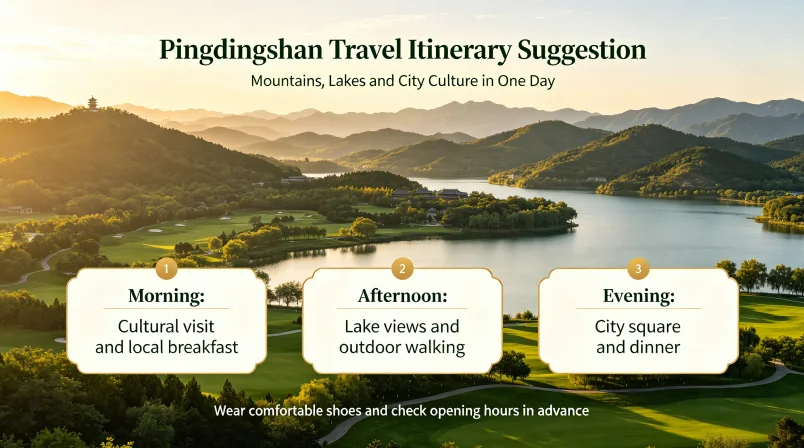
Suggested Itineraries for Pingdingshan
Option 1: 2‑Day Essential Tour (Yao Mountain + Zhongyuan Buddha)
- Day 1: Arrive at Yao Mountain in the morning. Take the cable car up to visit Yuhuangding, Stone Man Peak, and Nine‑Turn Waterfall. In the afternoon, descend and check into a hot spring hotel to relax.
- Day 2: Morning: visit Zhongyuan Buddha – view the statue and Fo Quan Temple. Noon: have a local meal in Lushan County. Afternoon: visit Xiangshan Temple (about 1.5 hours). Return in the evening.
Option 2: 3‑Day In‑Depth Tour (Yao Mountain + Buddha + Ru Porcelain + Xiangshan Temple)
- Day 1: Full day at Yao Mountain – explore Red Maple Valley, Silver Thread Waterfall, and more. Overnight at a hot spring hotel at the foot.
- Day 2: Morning: Zhongyuan Buddha. Afternoon: visit Baofeng Qingliang Temple Ru Kiln site and the Ru Porcelain Museum. Overnight in Pingdingshan city.
- Day 3: Morning: visit Xiangshan Temple. Afternoon: visit Pingdingshan Museum. Return in the evening.
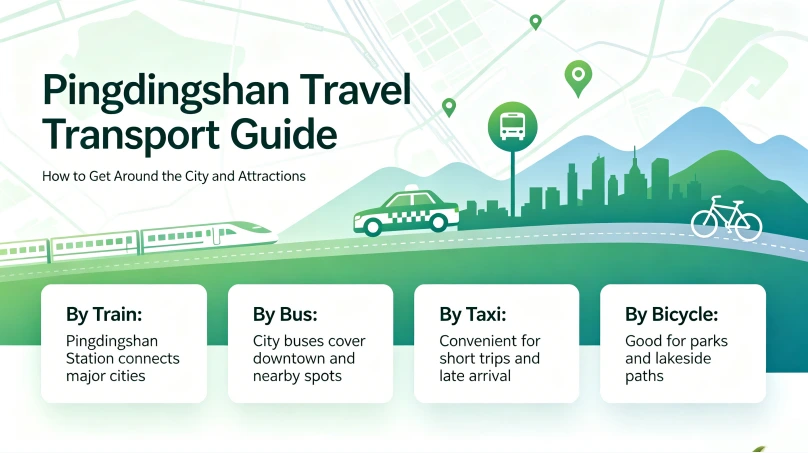
Transportation Guide for Pingdingshan
How to Get to Pingdingshan
- High‑speed train / bullet train (most recommended) : From Zhengzhou East Station, take a high‑speed train to Pingdingshan West Station (about 1 hour, fare about 60–80 RMB). After exiting, take a bus or taxi to Yao Mountain or Lushan County.
- Long‑distance bus: Zhengzhou Central Bus Station has buses to Pingdingshan (about 2.5 hours).
- Self‑drive: From Zhengzhou, take the Zhengzhou–Luanchuan Expressway to the Lushan exit – about 2 hours total. Parking at Yao Mountain costs about 10 RMB per day.
Local transportation
- Pingdingshan city: Taxi starting fare 6–7 RMB; Didi Chuxing available. Bus fare 1 RMB.
- To Yao Mountain: Take the Yao Mountain tourist bus from Pingdingshan West Station (about 1.5 hours), or hire a car/Didi.
- To Zhongyuan Buddha: Taxi from Pingdingshan West Station – about 30 minutes.
- To Xiangshan Temple: Taxi from Pingdingshan city – about 20 minutes.
- To Baofeng Ru Kiln site: Taxi from Pingdingshan city – about 40 minutes.

Pingdingshan Food Recommendations
Pingdingshan cuisine blends western Henan mountain flavors with Central Plains traditions – simple and hearty.
- Lushan Mixed Stew (Lan Guo Cai) : A famous dish from Lushan County. It stews pork, tofu, vermicelli, wood ear mushrooms, cabbage, and about ten other ingredients together in one pot – rich and flavorful, great with rice.
- Jiaxian Hele Noodles: Round noodles pressed from buckwheat or wheat flour, served in mutton broth with chili oil – chewy and smooth.
- Baofeng Mutton Soup: Broth made from mutton bones until milky white, with tender meat. Served with baked flatbread or baked dough.
- Yexian Braised Noodles: Similar to Zhengzhou braised noodles, but with thicker broth and wider noodles.
- Ru porcelain tea set: Not a food, but you can buy a Ru porcelain tea set and brew some Xinyang Maojian tea – to enjoy the refined taste of Song‑ dynasty literati.
Food gathering places: Zhongxing Road in Xinhua District, Pingdingshan city; Xiangyang Road in Lushan county town; farmhouse restaurants at the entrance of Yao Mountain.

Accommodation Recommendations
- Hot spring hotels at the foot of Yao Mountain: Such as Yao Mountain Fuquan Hot Spring Hotel – includes hot springs, the best choice for relaxing after hiking.
- Lushan county town: Mid‑range hotels about 150–300 RMB – good value.
- Pingdingshan city: Recommended areas – Xinhua District or Weidong District. International chains like Quanji and Hanting are available – prices 200–400 RMB.
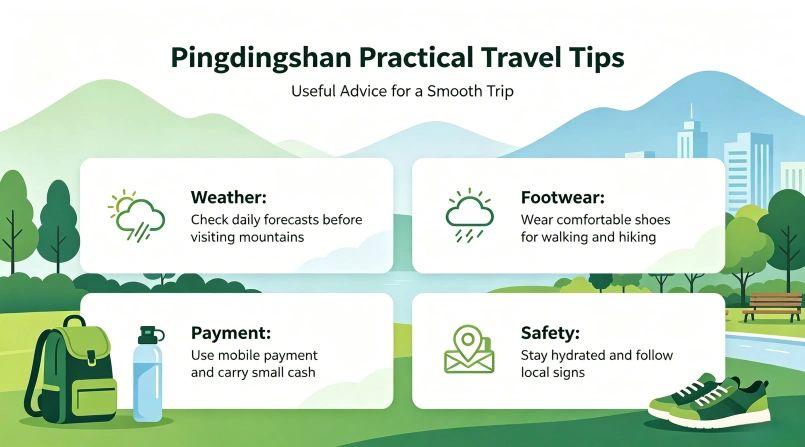
Practical Travel Tips for Pingdingshan
Language & Communication
Major signs at Pingdingshan and Yao Mountain have Chinese‑English labels, but most local restaurants and taxi drivers speak only Chinese. Download a translation app and save the offline pack.
Payment & Money
WeChat Pay and Alipay are widely accepted. Link an international credit card in advance. Carry a small amount of cash (200–300 RMB) for street vendors and emergencies.
Internet & SIM Cards
You can buy a short‑term SIM card (7–30 days) at Zhengzhou Airport or in Pingdingshan city using your passport.
Clothing & Gear
- Yao Mountain requires hiking – you must wear non‑slip hiking shoes or sports shoes.
- Summer: sun‑protective clothing, insect repellent, and plenty of water.
- Spring/Autumn: bring a light jacket – temperatures are lower at the summit.
- Winter: down jacket, gloves.
- Hiking poles are useful – you can rent them at the scenic area.
Safety & Health
- The hiking trails on Yao Mountain have railings, but some sections are steep – go at your own pace.
- Zhongyuan Buddha has many steps – walk slowly.
- It is recommended to purchase travel insurance.
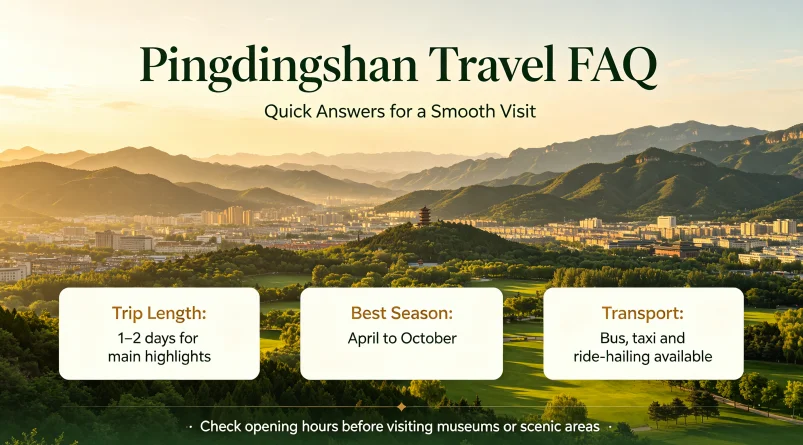
Frequently Asked Questions about Pingdingshan
Q: Which is better – Yao Mountain or Yuntai Mountain?
A: They are different. Yuntai Mountain is famous for its red‑rock gorge and waterfalls – more developed and easier to access. Yao Mountain is known for its high peaks, strange rocks, and cloud seas – more rugged and adventurous. Both are UNESCO Global Geoparks and each has its own charm.
Q: How many days do I need for Pingdingshan?
A: At least 2 days for Yao Mountain and the Buddha. If you are also interested in Ru porcelain and Guanyin culture, add another day.
Q: Can I climb to the top of Zhongyuan Buddha?
A: No, but you can get close views from the Worship Platform and Fo Quan Temple.
Q: Are there English‑speaking guides in Pingdingshan?
A: Yao Mountain and Zhongyuan Buddha can arrange English guides in advance – check with Trip.com or local travel agencies.
Final Words
Pingdingshan is an underrated travel destination. From the strange peaks and cloud seas of Yao Mountain, to the majestic Zhongyuan Buddha, to the ancestral home of Guanyin at Xiangshan Temple, and the elegant sky‑blue of Ru porcelain – it offers a dual charm of nature and culture. Compared to other popular Henan destinations, Pingdingshan is quieter, more primitive, and closer to the authentic heart of the Central Plains landscape.
Whether you are a hiker, a Buddhist devotee, or a ceramic art enthusiast, Pingdingshan will give you a unique and memorable travel experience. Start planning your Pingdingshan journey today!
Related Reading:
- Jiaozuo Attractions: Top 6 Must-Visit Places & Travel Guide 2026
- Yuntai Mountain Guide 2026: Red Stone Gorge, Waterfall & Itinerary
- Jiaozuo Food Guide 2026: Must-Try Dishes, Huai Mansion Donkey Meat & Iron Yam
- Jiaozuo Travel Guide 2026: Yuntai Mountain, Tai Chi Village & Itinerary
- 2026 Dengfeng Food Guide: Shaolin Veggie Delights & Local Snacks
- 2026 Luoyang Food Guide: Best Local Dishes, Water Banquet & Night Market Tips
- Dengfeng Travel Guide 2026: Shaolin Temple, Mount Song & Itinerary
- Luoyang Travel Guide 2026: Top Attractions, Food & Tips for Foreigners
- Henan Travel Guide 2026: Itinerary, Attractions & Tips for Foreigners
- Shaolin Temple Day Trip 2026: Complete Guide & Tips
- Kaifeng Food Guide 2026: Top 10 Must-Try Dishes