

Henan Travel Guide 2026: Itinerary, Attractions & Tips for Foreigners
Henan Travel Guide 2026
Henan Province is located in central China, with the Yellow River flowing through it. It is one of the main birthplaces of Chinese civilization. Known as “Zhongyuan” (Central Plains), Henan has the highest concentration of ancient capitals and UNESCO World Heritage Sites in China. From Shaolin kung fu to the Longmen Grottoes, from the Qingming Riverside Landscape Garden to the Yinxu oracle bones, Henan offers travelers a deep cultural journey through 3,000 years of history. This guide covers transportation, itineraries, attractions, food, and accommodation to help you plan your trip easily.
Why Choose Henan?
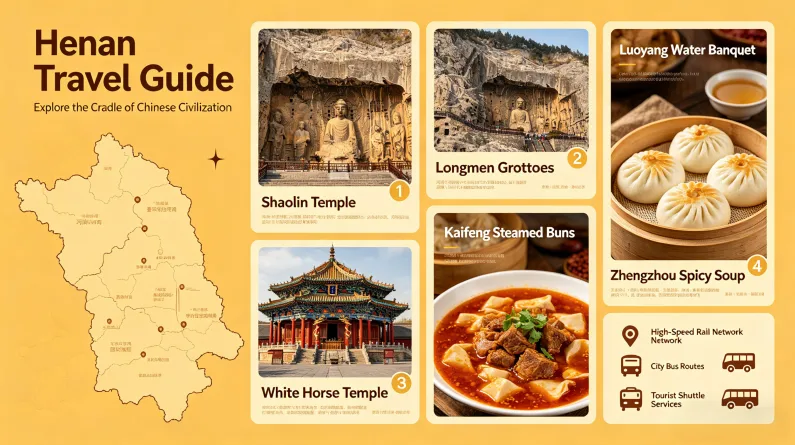
Henan is the cradle of Chinese civilization. Among China’s eight great ancient capitals, four are in Henan: Luoyang, Kaifeng, Zhengzhou, and Anyang. The province has worldclass cultural heritage sites, including the Longmen Grottoes, Shaolin Temple (as part of the “Historic Monuments of Dengfeng”), Yinxu, the Grand Canal (Henan section), and the Silk Road (Henan section).
ShaoLin Temple is the birthplace of kung fu and a pilgrimage site for martial arts lovers worldwide.
Henan cuisine (Yu cuisine) is the root of many Chinese regional dishes. The night markets in Kaifeng, the Luoyang Water Banquet, and Zhengzhou braised noodles are very famous.
Compared to Beijing or Shanghai, travel in Henan is 30–50% cheaper – great value for money.
Best Time to Visit Henan
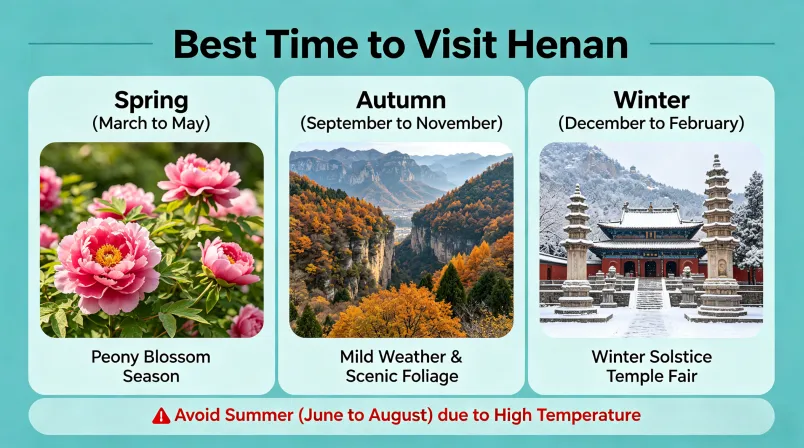
The best travel seasons are spring (April–May) and autumn (September–October). Temperatures range from 15–25°C (59–77°F) and the weather is pleasant.
April: Luoyang Peony Festival
October: Kaifeng Chrysanthemum Culture Festival
Summer (June–August) is hot and rainy, but Longmen Grottoes and Shaolin Temple are still crowded. Go out early in the morning and avoid midday heat.
Winter (November–February) is cold and dry, with fewer tourists. It’s a good time for museums and hot springs.
Avoid Chinese public holidays (May Day, National Day, Golden Week – Oct 1–7, and Spring Festival). During these times, attractions are packed and hotel prices double.
Must-Visit Cities and Attractions in Henan
Zhengzhou – Transport Hub and Ancient Capital of the Shang Dynasty
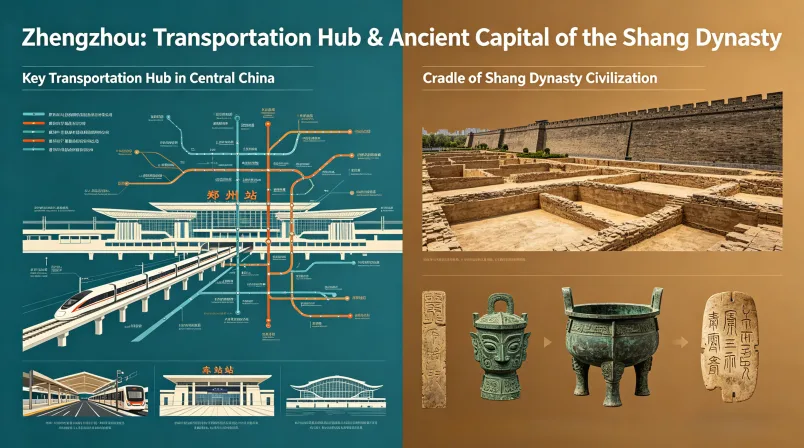
Zhengzhou is the capital of Henan and the railway heart of China. Recommended places:
Henan Museum – One of China’s top museums. It houses the Jiahu bone flute (the world’s oldest playable musical instrument) and the Fuhao owl-shaped zun (ritual wine vessel). Free entry, but you must reserve tickets via their WeChat public account.
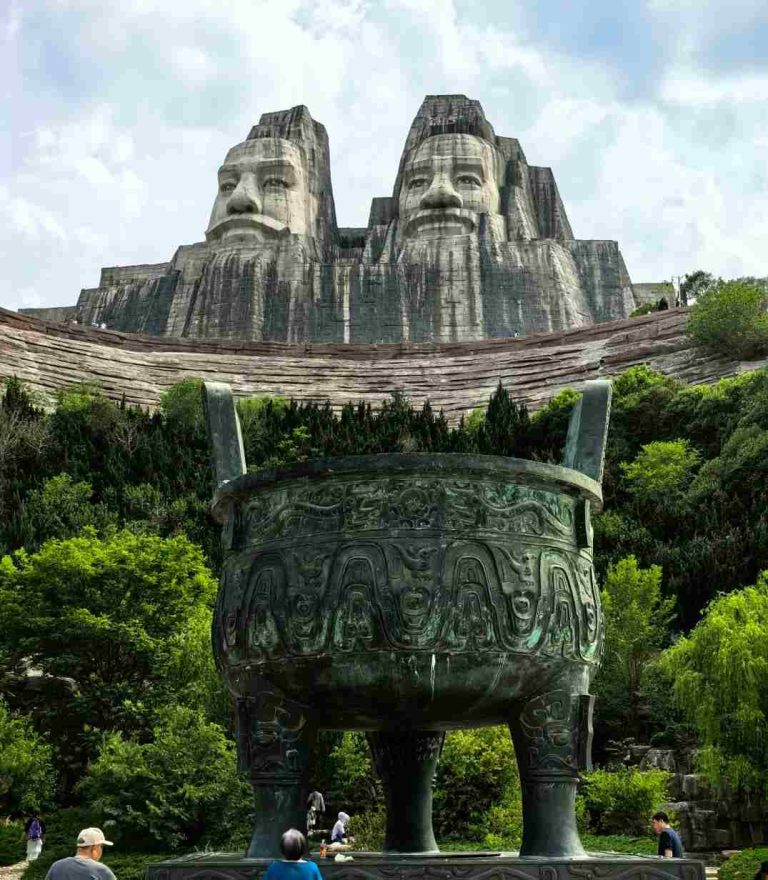
Yellow River Scenic Area – See the “Mother River” and the giant statues of Emperors Yan and Huang.
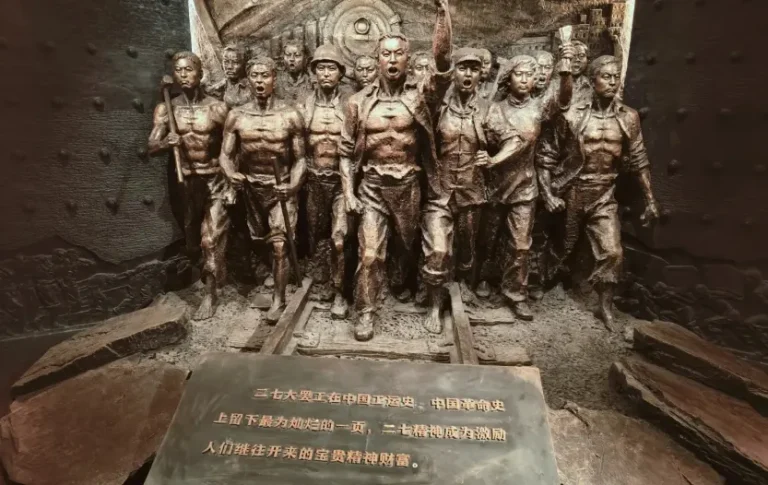
Erqi Memorial Tower – Zhengzhou’s landmark, built to remember the 1923 railway workers’ strike. You can go up the tower for a city view.
Zhengzhou Shang City Ruins – 3,600yearold city walls from the Shang dynasty, right in the city center. Free entry.
Luoyang – Ancient Capital of 13 Dynasties, Peonies, and Grottoes
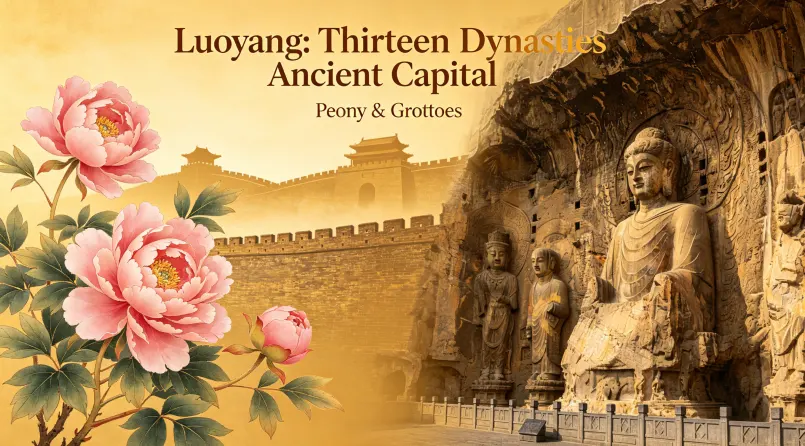
Luoyang is one of the longest-established capitals in China. Main highlights:
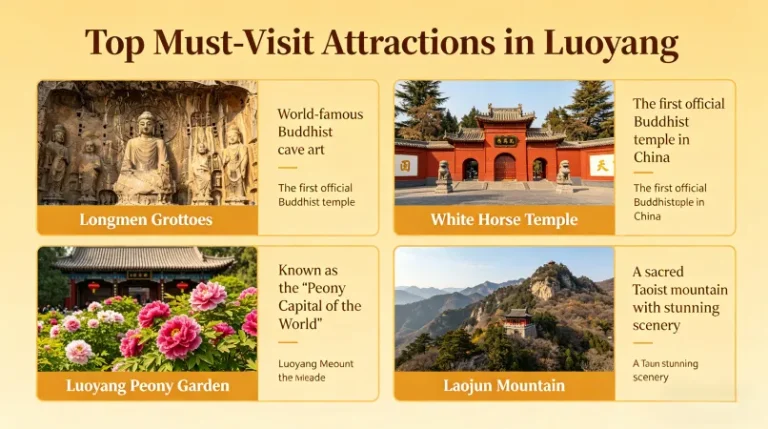
Longmen Grottoes (UNESCO World Heritage) – One of the four great grottoes in China. The Vairocana Buddha statue is the must-see highlight. Allow 3–4 hours.
White Horse Temple – China’s first officially built Buddhist temple (founded in 68 AD). It also has Thai, Indian, and Myanmar-style Buddhist halls – very unique.
Luoyang Museum – Rich collection of Tang tricolor glazed pottery (sancai) and bronze artifacts. Free but requires a reservation.
Luoyang Water Banquet – A feast passed down from the Tang dynasty. Try it at the “Zhen Bu Tong” restaurant.
Mount Laojun – A famous Taoist mountain with stunning scenery, but it is far from the city (allow 1–2 days).
Best time: April during the Peony Festival – the whole city blooms, but it’s very crowded.
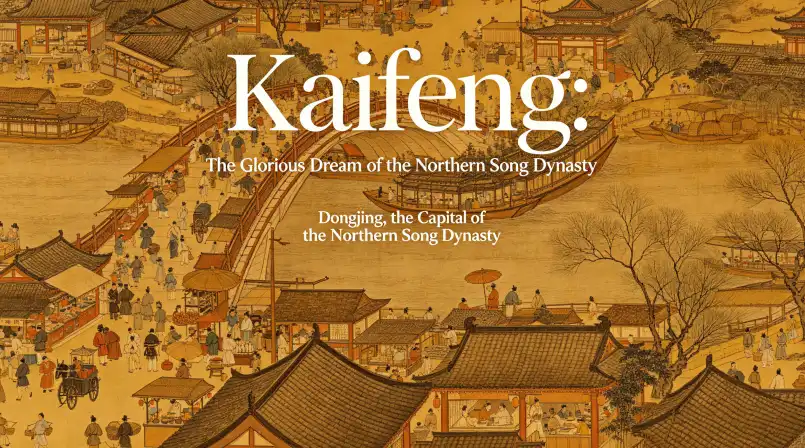
Kaifeng – Dream of Tokyo (the Song Dynasty Capital)
Kaifeng was the capital of the Northern Song dynasty and was known as “Dongjing Bianliang” during the Northern Song dynasty. Main attractions:
Qingming Riverside Landscape Garden – A large theme park built based on the famous painting Along the River During the Qingming Festival. Live performances such as “Yue Fei Defeats the Little Prince with a Spear” are spectacular.
Iron Pagoda – A glazed brick pagoda from the Northern Song dynasty (55.88m tall). It has survived a thousand years of earthquakes and floods.
Longting Park – Site of the Song dynasty imperial palace, built on a high terrace overlooking Pan Lake and Yang Lake.
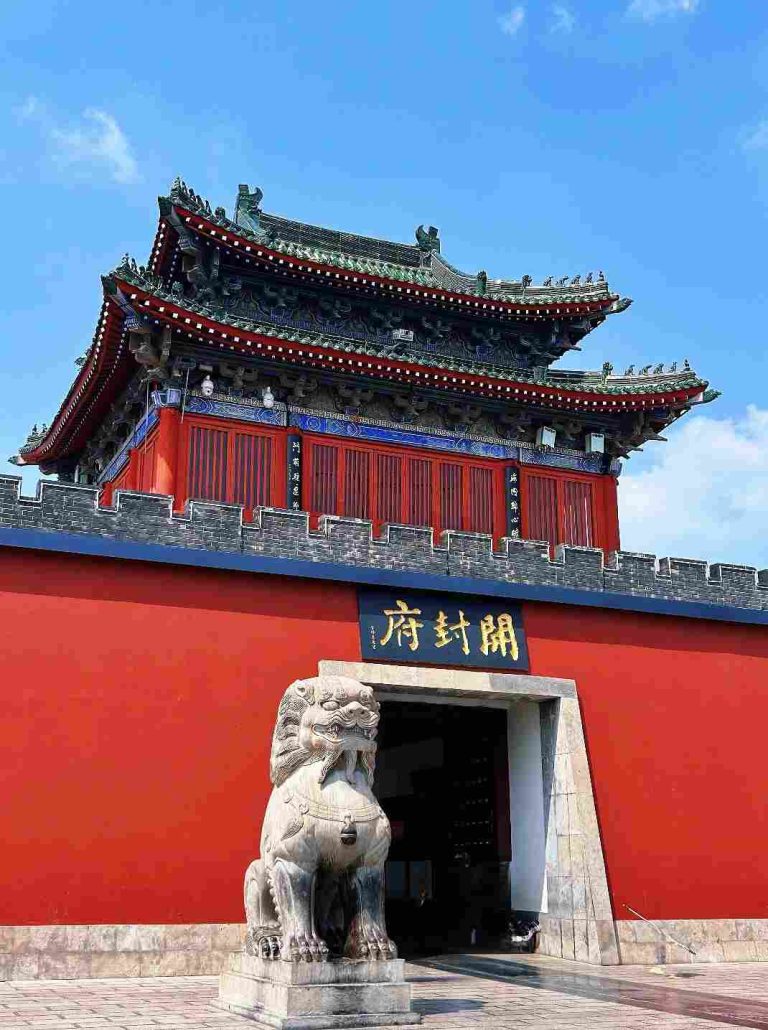
Kaifeng Mansion – Where Bao Zheng (a legendary judge) worked. Daily opening ceremony and “Judge Bao hears a case” performances.
Daxiangguo Temple – A royal temple from the Northern Song dynasty. Inside is a thousand-hand, thousand-eye wooden statue of Guanyin (national treasure).
Gulou Night Market – The ancestor of all night markets in China. Must-try: soup dumplings, fried jelly, almond tea, and mutton pancake.
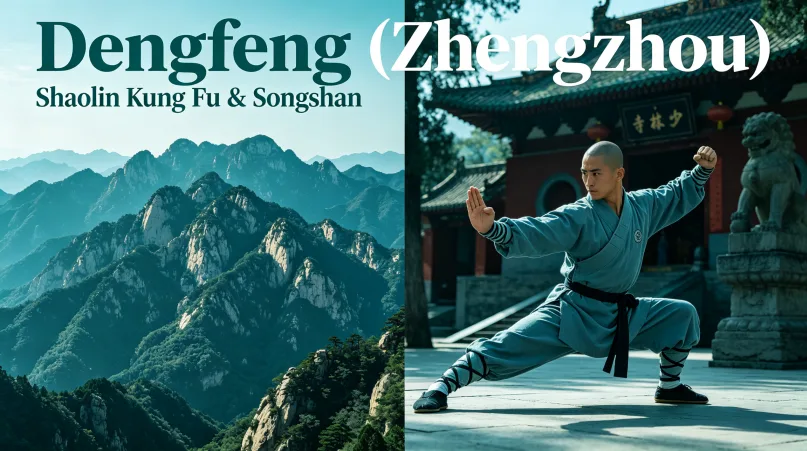
Dengfeng (under Zhengzhou) – Shaolin Kung Fu and Mount Song
Dengfeng is about 1.5 hours by car from Zhengzhou. It is home to the Shaolin Temple and Mount Song.
Shaolin Temple – Birthplace of kung fu. Must-sees: kung fu performance, the Pagoda Forest (burial stupas of high monks), and the main temple complex.
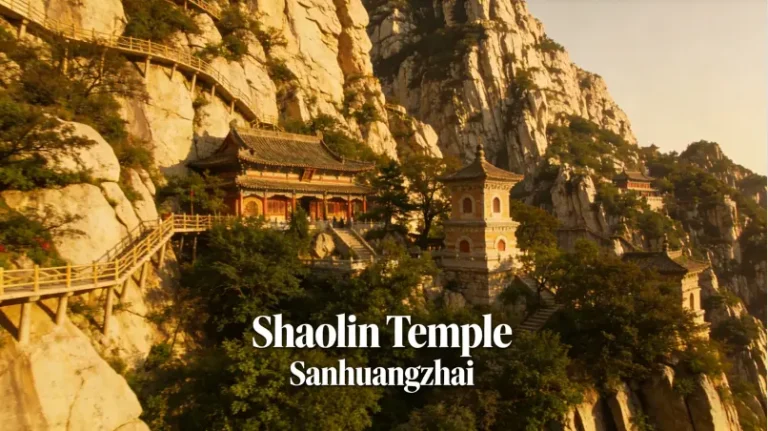
Mount Song – One of China’s Five Great Mountains (the “Central Mountain”). The Sanhuang Village area has a cliffside plank road with amazing views. You can take a cable car up.
Songyang Academy – One of the four great ancient academies of China. Famous Song dynasty philosophers once taught here.
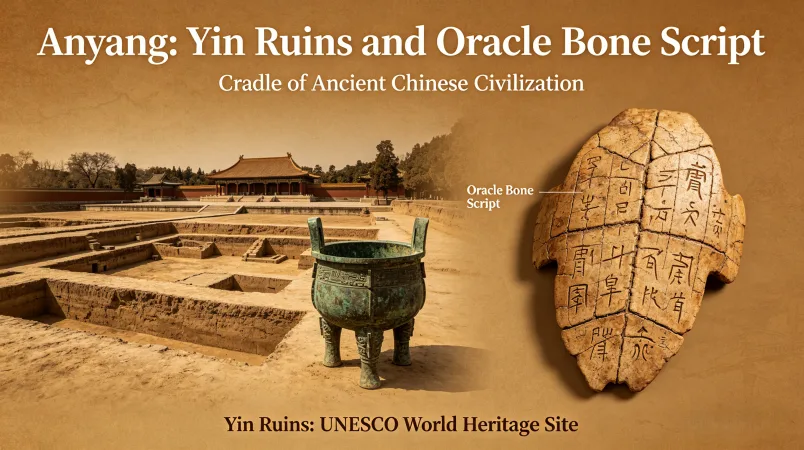
Anyang – Yinxu and Oracle Bones
Anyang is in northern Henan. It was the late Shang dynasty capital.
Yinxu (UNESCO World Heritage) – Where oracle bones were first discovered. You can see the oracle bone pit, chariot pits, and the Tomb of Fuhao (the first historically recorded female general in China).
National Museum of Chinese Writing – Learn how Chinese characters evolved from oracle bones to modern simplified script.
Hongqi Canal – Located in Linzhou City. This manmade “River in the Sky” was carved in the 1960s. It shows the spirit of people changing nature. From Anyang, allow a full-day trip.
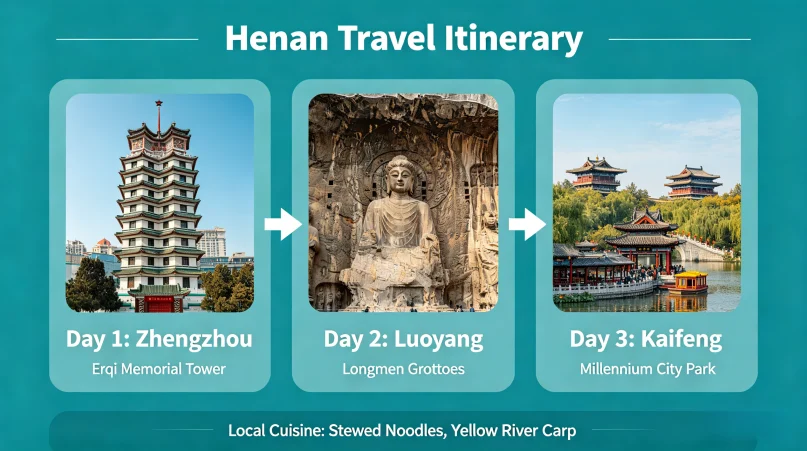
Suggested Itineraries
5Day Essential Tour (Zhengzhou + Luoyang + Kaifeng)
- Day 1 – Arrive in Zhengzhou. Visit Henan Museum (3 hours), then Erqi Memorial Tower and Dehua Pedestrian Street. At night, go to Jiankang Road Night Market.
- Day 2 – Day trip to Shaolin Temple from Zhengzhou (tour bus or private car). Visit the temple, kung fu show, and Pagoda Forest. If time permits, take the cable car up Mount Song’s Sanhuang Village. Return to Zhengzhou in the evening.
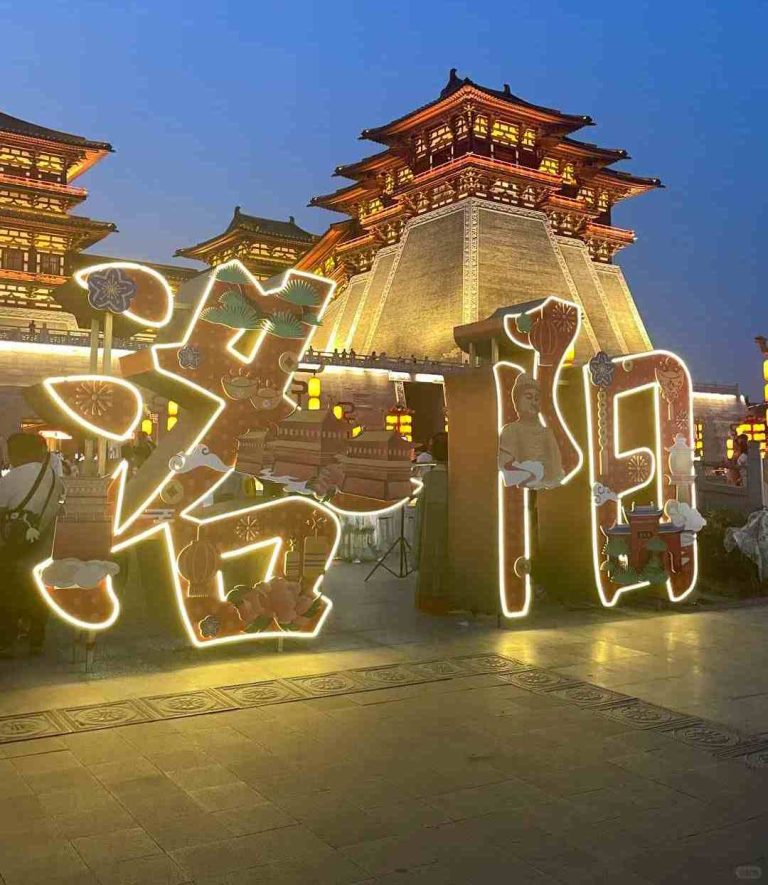
- Day 3 – Take a high-speed train from Zhengzhou East to Luoyang (about 30 min). Morning: Longmen Grottoes. Afternoon: White Horse Temple. Evening: Luoyang Old Town Cross Street Night Market.
- Day 4 – Morning: Luoyang Museum. Afternoon: high-speed train to Kaifeng (about 40 min). Evening: Gulou Night Market.
- Day 5 – Visit Qingming Riverside Landscape Garden (4 hours), then Iron Pagoda Park and Longting Park. Return from Kaifeng North or Kaifeng Station in the evening.
7-Day In-Depth Tour (add Anyang)
- Add two days for Anyang to the 5-day itinerary:
- Day 6 – Take a high-speed train from Zhengzhou or Kaifeng to Anyang (about 1.5 hours). Afternoon: Yinxu and National Museum of Chinese Writing.
- Day 7 – Full-day trip to Hongqi Canal (private car or local tour). Return in the evening.
10-Day Panoramic Tour
- Based on the 7-day tour, you can add 1–2 days for Mount Laojun near Luoyang, or go to Jigong Mountain in Xinyang, or Zhuge Liang’s Thatched Cottage in Nanyang.
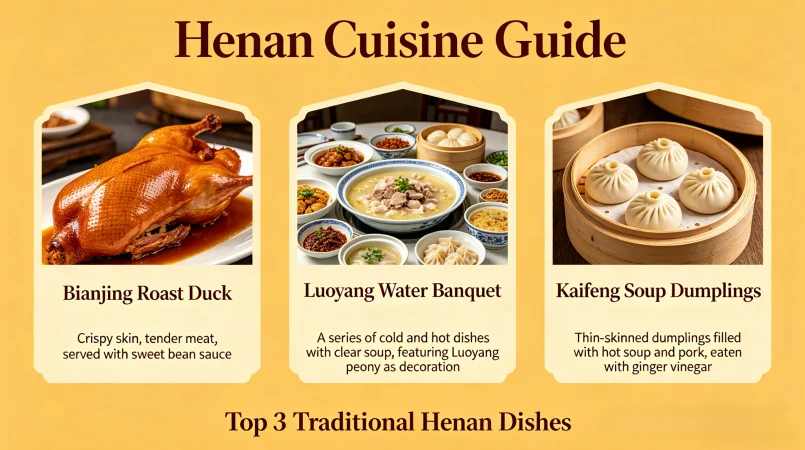
Henan Food Guide
- Henan cuisine is savory and focuses on balancing the five flavors. Must-try dishes and where to find them:
- Braised Noodles (Huimian) – Zhengzhou. Wide noodles in rich mutton broth. Try “Heji Huimian” or “Xiaoji Sanxian Huimian”.
- Spicy Pepper Soup (Hulatang) – Zhengzhou / Zhoukou. Thick, peppery breakfast soup. Try “Fang Zhongshan Hulatang”.
- Luoyang Water Banquet – 24 dishes served in soup course after soup. Try “Zhen Bu Tong”.
- Kaifeng Soup Dumplings – Thin skin, big filling. First bite: suck the soup. Try “Diyilou” or “Huangjia Old Shop”.
- Yellow River Carp with Baked Noodles (Li Yu Bei Mian) – Sweet and sour carp topped with thin, crispy noodles. Try “Youyixin”.
- Daokou Roast Chicken – Anyang. Tender, bone-soft roast chicken. Vacuum-packed – great as a souvenir.
- Bucket Chicken (Tongziji) – Kaifeng. Salty and chewy. Try “Ma Yuxing”.
- Fried Jelly (Chao Liangfen) – Kaifeng night market. Fried mung bean jelly, crispy outside and soft inside.
- Almond Tea (Xingrencha) – Kaifeng night market. Sweet almond‑based drink with sesame, peanuts, and raisins.
Best night markets:
- Zhengzhou – Jiankang Road Night Market, Dehua Xinjie Underground Night Market
- Luoyang – Laocheng Cross Street Night Market
- Kaifeng – Gulou Night Market and Xisi Night Market
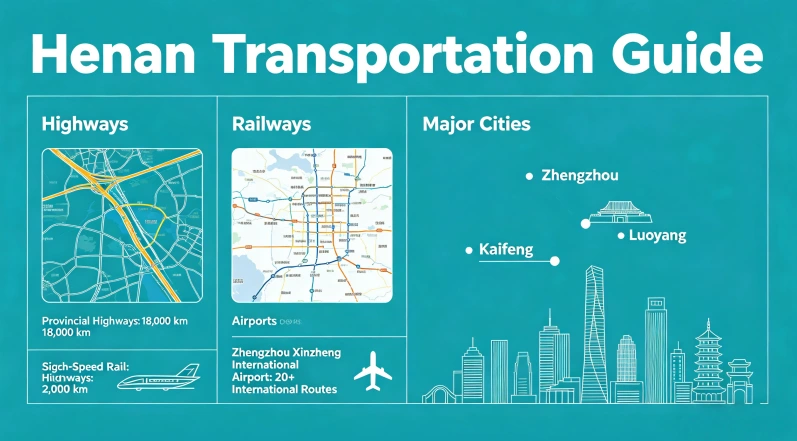
Transportation in Henan
Getting to Henan
Plane – Zhengzhou Xinzheng International Airport is the main gateway, with direct flights to some Asian and European cities.
High-speed train – Zhengzhou is the center of China’s “star-shaped” high-speed rail network. Travel time: Beijing ~2.5h, Xi’an ~2h, Shanghai ~4–5h, Wuhan ~2h.
Regular train – Cheaper but slower and less comfortable.
Getting around Henan
High-speed/intercity trains – Best way between cities. Zhengzhou–Luoyang: 30–40 min; Zhengzhou–Kaifeng: 20–30 min; Zhengzhou–Anyang: 1–1.5 h; Luoyang–Kaifeng: about 1.5 h.
Long-distance bus – For counties without high-speed rail. From Zhengzhou Central Bus Station, buses run to Shaolin Temple, Luoyang, Kaifeng, etc.
Private car / ride-hailing – Good for small groups, especially for scattered attractions like Shaolin Temple or Mount Laojun. Use the Didi Chuxing International App.
Within cities
Subway – Zhengzhou and Luoyang have subway networks covering most major attractions. Kaifeng has no subway, but the city center is compact – walk or bike.
Taxi / ride-hailing – Starting fare is 6–10 RMB. Good value.
Shared bikes – Meituan and Hellobike bikes are everywhere. Great for short trips.
Accommodation Recommendations
Choose by budget and itinerary:
Zhengzhou – Erqi Square area (lively, convenient) or Zhengdong New District (modern, quiet, more high-end hotels). Budget: 150–300 RMB/night; midrange: 300–600 RMB; 5-star: 600–1200 RMB.
Luoyang – Xigong District or Luolong District (near Longmen Grottoes). Prices similar to Zhengzhou.
Kaifeng – Gulou commercial area (close to night market) or near Qingming Riverside Landscape Garden (good environment). Budget: 150–250 RMB/night.
Dengfeng – Near Shaolin Temple or downtown Dengfeng. 200–500 RMB/night.
Anyang – Wenfeng District or Yindu District. Budget: 150–250 RMB/night.
Booking tip – Use Booking.com, Agoda, or Trip.com. Check the “foreigners accepted” filter because some small hotels in China do not have a license to host foreign guests.
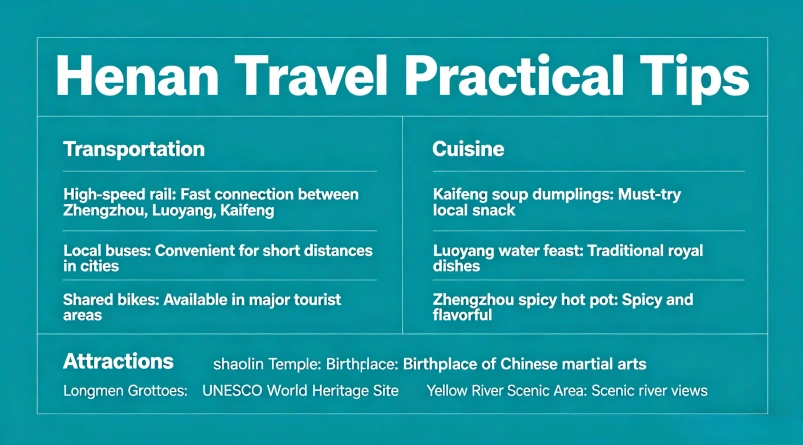
Practical Travel Tips
Language & Communication
Major attractions and high-speed rail stations have English signs. Most local restaurants and taxi drivers speak only Chinese. Download Google Translate or Microsoft Translator and pre‑download the offline Chinese pack. Learn a few key words:
Hello – Nǐ hǎo
Thank you – Xiè xie
How much? – Duō shǎo qián
This one – Zhè ge
Payment & Money
Mobile payment is everywhere in China.WeChat Pay and Alipay are almost universal. Strongly recommend linking your international credit or debit card to these apps before you go. Also carry a small amount of cash (200–500 RMB) for night market stalls, small vendors, and public toilets. 1, 5, and 10 RMB notes are most useful. Credit cards are accepted only at high-end hotels and malls.
Internet & SIM Cards
You can either use international roaming (expensive but easy) or buy a short-term SIM card (7/15/30 days) from China Mobile, China Unicom, or China Telecom at the airport or official stores. Price: ~50–150 RMB with data and calls. Show your passport. Hotels, restaurants, and high-speed trains usually have free WiFi.
Safety & Health
Henan is very safe, but in crowded places (night markets, scenic spots), watch your belongings. Do not drink tap water – buy bottled water or boil tap water first. In summer: hot and mosquitoes – bring repellent. In winter: dry and cold – bring moisturizer. For medical care, large hospitals have international sections, but English may be limited. Buy travel insurance that covers China.
Visa & Entry
Most foreign visitors need a tourist visa (L visa) from a Chinese embassy or consulate in advance. Some nationalities can use the 144-hour visa‑free transit at Zhengzhou Xinzheng International Airport. Check the latest rules before traveling.
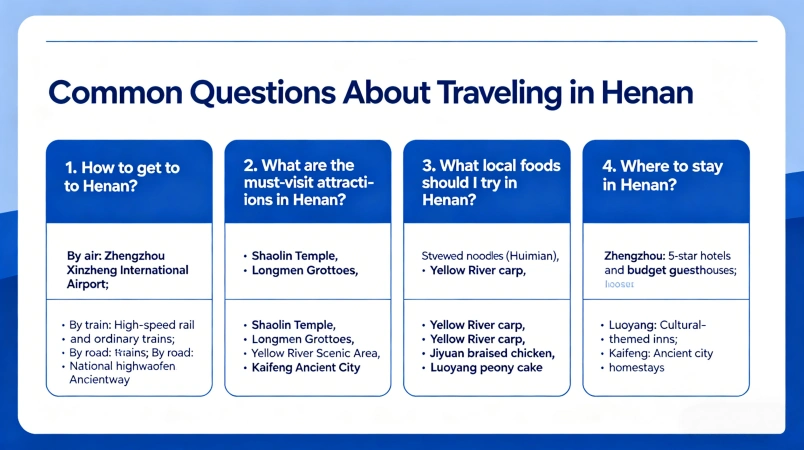
Frequently Asked Questions
Q: Do I need to speak Chinese to travel in Henan?
A: Not necessarily. Major attractions have English services, but knowing basic phrases and using a translation app will make things much smoother.
Q: Is Henan safe?
A: Very safe, with low crime. Still, keep an eye on your belongings at night markets.
Q: Can I rent a car and drive myself?
A: China does not recognize international driving permits. You need a Chinese driver’s license. Driving is not recommended for foreign tourists – high-speed trains + taxis are more convenient.
Q: What are good souvenirs from Henan?
A: Xinyang Maojian tea, Xinjiang red dates (actually from Xinzheng, Henan – a famous date variety), Daokou roast chicken (vacuum‑packed), Kaifeng peanut cake, small Luoyang Tang sancai figurines, and Shaolin Temple vegetarian biscuits.
Q: How common is English in Henan?
A: Young people, hotel front desks, and ticket offices at main attractions speak basic English. Taxi drivers and night market stall owners generally do not.
Henan is a living microcosm of Chinese history and the “root” of Chinese civilization. From the Shang dynasty walls in Zhengzhou to the Longmen Grottoes in Luoyang, from the Qingming Riverside Garden in Kaifeng to the oracle bones of Yinxu in Anyang – every place tells a story thousands of years old. The province offers worldclass cultural heritage, warm street food, and the lively spirit of night markets. Whether you are a history lover, a kung fu fan, a foodie, or just a traveler looking for the “real China,” Henan will give you an unforgettable journey.
Plan your trip to Henan and begin a time‑travel journey through 3,000 years of Chinese civilization!
Related Reading:
- Kaifeng Food Guide 2026: Top 10 Must-Try Dishes
- What is the Specialty of Henan Food? A Foreigner’s Guide to Henan Cuisine
- 10 Best Free Attractions in Zhengzhou, China (2026 Travel Guide)
- Zhengzhou Night Market Guide: Food, Tips & Best Streets for Foreigners
- Zhengzhou to Luoyang Day Trip: Full Itinerary & Travel Guide for 2026
- Shaolin Temple Day Trip from Zhengzhou: 2026 Ultimate Itinerary & Tips
Most travelers never hear of Sanmenxia, 3 hours west of Luoyang by train. But the Earth Crack Canyon (Dixia Canyon) is a 2026 must-see – a narrow slot canyon carved into the Loess Plateau, with wooden walkways suspended between vertical walls. It’s like a mini Grand Canyon but greener. Combine with the Han Dynasty Tomb Museum near the city – you can descend into a 2,000-year-old underground palace. No crowds, no English signs, just pure discovery. Take the high-speed train from Luoyang to Sanmenxia South (¥70, 40 minutes), then hire a driver for the day (¥300). Stay at the Shanzhou Inn – converted cave dwellings with heated brick beds. This is Henan for adventurous souls.
The Qingming Riverside Landscape Park (¥120) is a tacky replica of a Song Dynasty painting – actors in costume, loud music, and crowded bridges. Instead, walk the free section of the ancient city wall near the north gate, then visit the Iron Pagoda – a 1,000-year-old glazed brick tower that survived 37 floods and earthquakes. For Song Dynasty vibes, the Kaifeng Museum (free) has better artifacts than the theme park. And for food, the old alley behind Shanxian Gate has stalls selling Song-style “dumpling banquet” that locals actually eat. Save your money and skip the Disneyland version of history.
The high-speed train from Zhengzhou to Luoyang takes 40 minutes (¥60) – book on Trip.com. But here’s a pro tip: take the slow train (K-series) for ¥20, 90 minutes. You’ll see countryside farmland, pass through small stations, and arrive at Luoyang’s old station (closer to the grottoes than the high-speed station). Both options are fine, but avoid the bus – it gets stuck in traffic and takes 2+ hours. For a day trip from Zhengzhou to Shaolin Temple, take the direct tourist bus from Zhengzhou East Station – leaves at 8 AM, returns at 4 PM, ¥50 round trip. Don’t rely on DiDi for remote temples – signal is weak.
Luoyang’s famous “Water Banquet” (24 dishes served in sequence) sounds exciting but is designed for large groups. If you’re solo or a couple, order à la carte. Must-tries: “yancai” (燕菜) – a bird’s nest-like soup made from turnip, “liangxiang” (两厢) – double-flavored tofu, and “huangmen” (黄焖) – braised pork. The best restaurant is Zhenbutong (真不同) on Laocheng Street – it’s touristy but consistent. Ask for “half portions” (小份) to avoid wasting food. Total cost for two: ¥150. Skip the “imperial set menu” – it’s overpriced and underwhelming.
Yuntai’s Red Stone Gorge is stunning but packed by 9 AM. The trick: take the first shuttle bus from the gate at 6:30 AM and speed-walk to the gorge. You’ll have the red cliffs and turquoise pools for one quiet hour. Then skip the crowded main trail and head to the Tanpu Gorge – a 2 km walk past 50 waterfalls, nearly empty after 10 AM. For the brave, hike Zhuyu Peak – 2,000 steps but views over the entire Taihang Mountains. Avoid Chinese national holidays (May Day, October break) – the park hits 50,000 visitors daily. Stay overnight in Guliquan Village inside the park for early access.
If you plan your trip for April’s peony season, here’s the strategy: avoid the main gardens (Wangcheng Park, China National Flower Garden) on weekends. Instead, go to Suiyang City Ruins Peony Garden – less crowded, same blooms. Arrive at 7 AM when gates open – you’ll have misty flower fields to yourself. By 10 AM, tour buses arrive and you’ll be done. Alternatively, catch the late bloom in early May at the Luoyang Botanical Garden – the hillside peonies flower two weeks later. Book hotels in Luoyang three months ahead for April – prices triple. And never buy peony seedlings from street vendors – they’re often fake.
Anyang is off most foreign tourist radars, but it’s essential for history lovers. The Yinxu Ruins (UNESCO) are where oracle bones were discovered – the earliest evidence of Chinese writing. Hire a guide at the entrance (¥100) to explain the bronze casting pits and royal tombs. The Anyang Museum next door has the only intact Shang Dynasty chariot in the world. To get there: high-speed train from Zhengzhou (40 minutes). Spend the night – the city is quiet and cheap. Try the local “daokou roast chicken” (道口烧鸡), sold at small shops near the train station. Anyang is for travelers who want deep history, not Instagram views.
Most travelers treat Zhengzhou as a train station to elsewhere. But the Henan Museum is world-class – the earliest bronze vessels, jade artifacts, and the “Jiahu bone flute” (9,000 years old). It’s free but book online three days ahead. Another gem: the Shang Dynasty Ruins near the city center – a 3,600-year-old walled city hidden behind modern apartments. For food, try “hulatang” (胡辣汤) for breakfast – a spicy, thick pepper soup with beef and glass noodles. The best is at Fang Zhongqi (方中山) on Renmin Road. Zhengzhou deserves one full day, not just a layover.
Most tourists head to Gulou Square night market – it’s fine but pricey. Walk 10 minutes west to Xisi Street (西司街) , where locals queue for steamed stuffed buns (灌汤包), sesame cakes, and sweet tofu soup. Try the stall selling “huimian” (烩面) – hand-pulled noodles in lamb broth, ¥12 a bowl. The market runs from 6 PM to midnight. Bring small bills and point at what looks good. Kaifeng is also home to the Millennium City Park – skip the replica Song Dynasty town and instead walk the real ancient city walls at sunset. They’re free and empty.
The Shaolin Temple complex is overcrowded and overpriced (¥100 entry). The real magic is the Songshan Mountain behind it. Take the cable car up, then walk the Sanhuangzhai plank path – cliffside trails with views that rival any in China. You’ll pass ancient Taoist shrines, wild monkeys, and see the temple from above without the kung fu show ticket touts. After hiking, visit the Pagoda Forest (塔林) near the temple exit – it’s free and atmospheric. If you must see kung fu, the 3 PM outdoor performance is less crowded than the indoor one. For 2026, skip the packaged “kung fu school tours” – they’re tourist traps.
Most guides tell you to visit Longmen Grottoes in the morning to avoid crowds. I did the opposite and it worked perfectly. Arrive at 3:30 PM, walk the west hill first (the massive Buddha), then cross the bridge to the east hill as the sun drops. The golden light hits the carved cliff faces, tour buses are gone, and you’ll have the 90,000 statues nearly to yourself by 5 PM. Stay until they kick you out at 6 PM – the soft evening glow makes for unforgettable photos. Avoid July and August – the grottoes face west, so afternoon sun is brutal in summer. April (peony festival) is beautiful but packed. October is ideal.