

Xuchang Food Guide 2026: Three Kingdoms Flavors, Noodles & Local Delicacies
Xuchang, an ancient Central Plains city famous for its Three Kingdoms history, is not only home to the legendary stories of heroes like Cao Cao and Guan Yu but also has nurtured a unique and rich food culture. Located in central Henan, Xuchang’s cuisine blends the culinary traditions of the Central Plains, with wheat‑based staples and a savory, moderate flavor – simple and hearty. Many local dishes are closely linked to Three Kingdoms culture, allowing you to taste history while enjoying delicious food. For foreign visitors, exploring Xuchang’s food is a taste journey into Central Plains culture and the spirit of the Three Kingdoms. This guide recommends the best local specialties, where to find them, and practical tips.
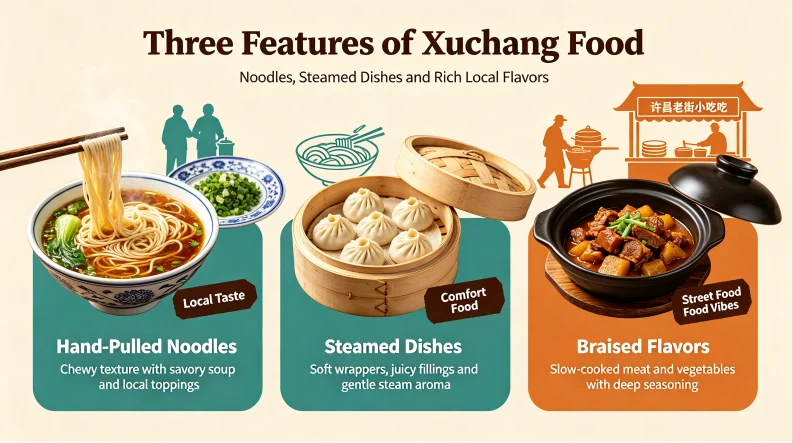
Three Key Features of Xuchang Cuisine
Xuchang lies in the heart of the Central Plains, and its food culture is deeply influenced by traditional Henan (Yu) cuisine, with its own distinct regional character. First, wheat‑based foods are central – noodles, flatbreads, steamed buns, and dumplings are staples on local tables. Second, Xuchang is the capital of Three Kingdoms culture – many dishes have legends and stories associated with historical figures like Cao Cao and Guan Yu, adding a unique cultural layer. Third, Xuchang cuisine is honest, affordable, and flavorful – no fancy plating, only the most genuine ingredients and the warmest tastes. The overall flavor is savory and moderate, not spicy – very friendly to foreign visitors.
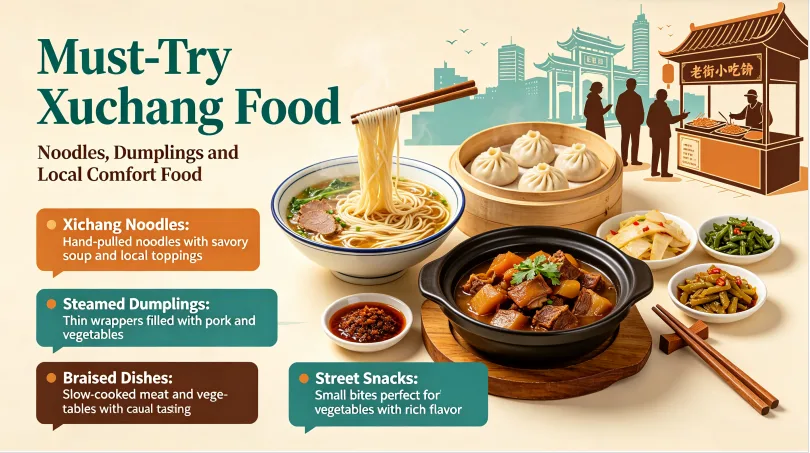
Must‑Try Xuchang Dishes
Xuchang Braised Noodles (Huimian) – A Central Plains Noodle Classic
Braised noodles are a classic throughout Henan, and Xuchang’s version stands out. Compared to Zhengzhou’s version, Xuchang braised noodles have a richer broth, wider and thicker noodles, and a chewier texture. The broth is made from mutton and bones, simmered for hours with various spices until milky white and fragrant. The noodles are hand‑pulled and wide, with a satisfying chew. Toppings usually include mutton slices, wood ear mushrooms, shredded tofu skin, quail eggs, goji berries, and sometimes local vermicelli.
Recommended places: Time‑honored Xuchang braised noodle shops in the city (several on Qiyi Road and Yingchang Avenue). Among them, Wang Ji Braised Noodles is one of the most highly regarded local old shops.
Price: About 15–22 RMB per bowl.
Xuchang Menzi – Soft, Chewy Sweet Potato Delight
Menzi is a traditional snack unique to the Xuchang area. It is made by mixing sweet potato starch with meat broth (or stock) and steaming it. The finished product is semi‑transparent and grey‑brown, with a soft, chewy texture – similar to meat jelly but more resilient. Menzi can be served cold, stir‑fried, or added to soups. The classic way is to stir‑fry sliced menzi with pork belly, green peppers, and garlic sprouts – the menzi absorbs the meat juices, becoming soft, savory, and very satisfying with rice.
Recommended places: Street stalls and home‑style restaurants in Xuchang city, or Lao Xuchang Flavor Restaurant.
Price: A plate of stir‑fried menzi costs about 20–30 RMB.
Yuzhou Vermicelli – Chewy, Smooth Sweet Potato Noodles
Yuzhou, a county‑level city under Xuchang, is famous for its high‑quality sweet potato vermicelli. Made using traditional methods with sweet potato starch – through processes of mixing, pouring, drying, and more – the finished vermicelli is translucent, does not break even after long cooking, and has a chewy, smooth texture. It can be stewed with meat, served cold, added to hotpots, or used in soups.
Classic ways to eat: Pork stewed with vermicelli is the most classic – stir‑fry pork belly until the fat renders, then simmer with vermicelli; the noodles soak up the rich meat broth. Cold vermicelli (with cucumber shreds, garlic, vinegar, and chili oil) is also a refreshing appetizer.
Recommended places: Home‑style restaurants in Xuchang city; specialty shops in Yuzhou city.
Price: A plate of pork stewed with vermicelli costs about 25–35 RMB.
Shenhou Tofu Feast – Light and Elegant Flavors of the Jun Porcelain Town
Shenhou Ancient Town is not only the birthplace of Jun porcelain but also known for its exceptional tofu. The town is in a mountainous area with clear spring water – tofu made with this water is rich in soybean flavor and fine in texture. Local chefs use tofu as the main ingredient to create dozens of different dishes, including cold tofu, braised tofu, tofu soup, tofu balls, and tofu pudding – collectively known as the “tofu feast.” The flavors are light and elegant, showcasing the original taste of the ingredients.
Recommended places: Tofu feast restaurants inside Shenhou Ancient Town (several on the old street).
Price: About 30–50 RMB per person (depending on the number of dishes).
Xuchang Roast Chicken – A Local Specialty Rivaling Daokou Chicken
Xuchang Roast Chicken is a traditional delicacy of Xuchang, as famous as Anyang’s Daokou Chicken – both represent Henan roast chicken. It is made from high‑quality live chickens, braised in a master stock with various spices. The finished product is glossy red, with tender meat that falls off the bone with a gentle shake. Compared to Daokou Chicken, Xuchang Roast Chicken has a slightly milder spice profile, allowing the natural flavor of the chicken to shine through.
Recommended places: Xuchang Roast Chicken specialty shops in Xuchang city (several branches).
Price: About 50–80 RMB for a whole chicken.
Xuchang Hot Tofu – Simple, Warm Street Food
Xuchang Hot Tofu is a very simple street snack. Fresh tofu is cut into thick blocks and kept warm in hot water. When served, it is topped with sesame paste, chili oil, garlic juice, and vinegar, then sprinkled with coriander and crushed peanuts. The tofu is silky and melts in the mouth, while the sauces are rich and fragrant – warm and comforting. The preparation is similar to Wugang Hot Tofu, reflecting a shared culinary preference across central Henan.
Recommended places: Street stalls in Xuchang city, especially near Chunqiu Tower.
Price: About 5–8 RMB per serving.
Xuchang Hulatang (Spicy Pepper Soup) – A Morning Wake‑Up Call
Hulatang is a classic breakfast throughout Henan, and Xuchang has its own local version. Compared to the versions in Zhoukou or Zhengzhou, Xuchang’s Hulatang has a milder pepper taste but a richer blend of spices. The soup is thicker and more filling, with ingredients such as wheat gluten, wood ear mushrooms, daylilies, beef slices, and vermicelli.
Recommended places: Breakfast shops on the streets of Xuchang city.
Price: About 5–10 RMB per bowl.
Cao Wei Ancient City Snacks – Explore History While You Eat
Cao Wei Ancient City is a recently developed Three Kingdoms‑themed cultural district in Xuchang. It features replica ancient architecture and a wide variety of specialty snacks. You can stroll through the ancient city and enjoy fried jelly, grilled gluten, sugar‑roasted chestnuts, fried skewers, and other street foods – experiencing the blend of Three Kingdoms culture and lively local life.
Recommended place: Cao Wei Ancient City pedestrian street.
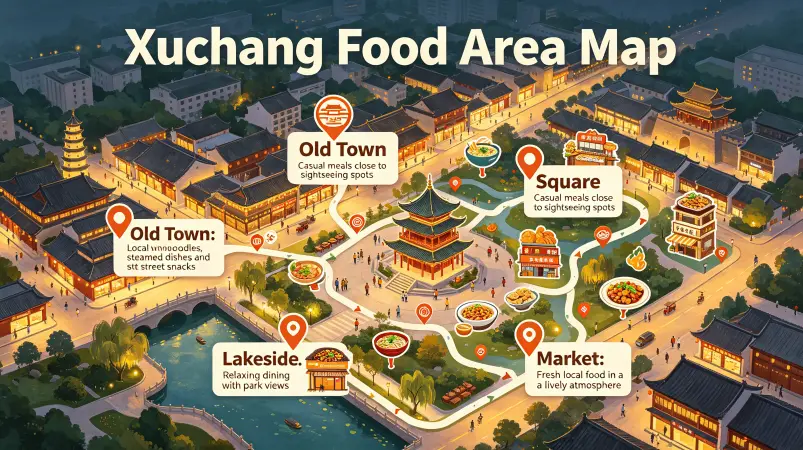
Recommended Food Gathering Places
Xuchang City
- Qiyi Road Food Street: Many local restaurants serving braised noodles, menzi, stewed vermicelli, and more.
- Yingchang Avenue Night Market: Opens in the evening – mainly barbecue and snacks – perfect for experiencing local street life.
- Wanda Plaza (Xuchang) : On the 4th floor, a variety of standard restaurants with comfortable ambiance.
Shenhou Ancient Town
- Old Street: Several restaurants offering tofu feast and mountain vegetables in a traditional setting.
Cao Wei Ancient City Pedestrian Street
- Three Kingdoms‑themed snack street: Enjoy a range of street snacks while exploring the ancient city.
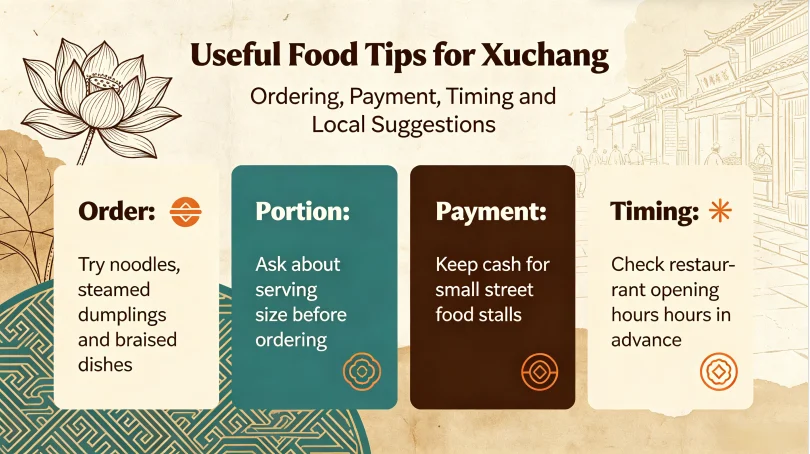
Practical Tips for Xuchang Food
Taste and Spiciness
Xuchang dishes are generally not spicy – they are savory and salty. Chili oil and vinegar are usually provided separately so you can adjust to your taste. If you cannot eat any spicy food, just say “no spice” when ordering.
Ordering Recommendations
- One person: A bowl of Xuchang braised noodles (about 18 RMB) + a cold vermicelli salad (about 12 RMB), or a portion of stir‑fried menzi with rice (about 25 RMB).
- Two persons: A portion of pork stewed with vermicelli (about 30 RMB) + half a Xuchang roast chicken (about 30 RMB) + a plate of stir‑fried greens (about 15 RMB) + two portions of rice.
- Souvenirs: Yuzhou vermicelli (about 15–25 RMB per bag), vacuum‑packed Xuchang roast chicken (about 50–80 RMB per chicken), Jun porcelain tea set (small pieces about 50–200 RMB).
Payment and Language
Restaurants and night markets accept WeChat Pay and Alipay. For night market stalls, carry 50–100 RMB in cash. Some small restaurants do not have English menus – use a translation app or point at what the next table is eating.
Vegetarian Friendliness
Xuchang has plenty of vegetarian options. Hot tofu, stir‑fried mixed vegetables, cold vermicelli, tofu feast, and various stir‑fried greens are all vegetarian. When ordering, tell the server “I am vegetarian – no meat and no animal oil.”
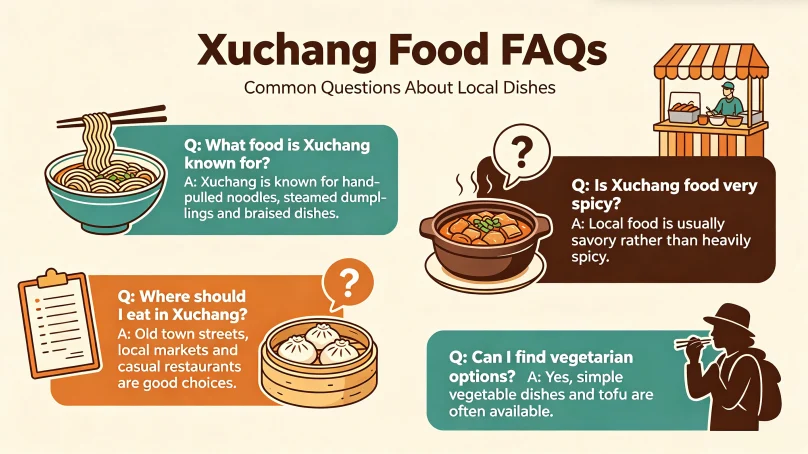
Frequently Asked Questions about Xuchang Food
Q: What is the difference between Xuchang braised noodles and Zhengzhou braised noodles?
A: Xuchang braised noodles have wider, thicker noodles with a chewier texture, a richer broth, and sometimes vermicelli added to the toppings. Both have their own merits – both are worth trying.
Q: What is Menzi?
A: Menzi is a traditional snack made from sweet potato starch and meat broth – it has a soft, chewy texture and can be served cold, stir‑fried, or in soups. It is one of Xuchang’s most distinctive local foods.
Q: What do you recommend for breakfast in Xuchang?
A: Hulatang with fried dough sticks or flatbread is the most authentic Xuchang breakfast. For something lighter, try millet porridge with pickles.
Q: What souvenirs can I bring home from Xuchang?
A: Yuzhou vermicelli, vacuum‑packed Xuchang roast chicken, Jun porcelain tea sets, and vacuum‑packed Menzi.
Xuchang’s food, like the city itself, carries both historical depth and everyday warmth. From a fragrant bowl of braised noodles, to a plate of soft and savory menzi, to a steaming cup of hot tofu on the street – every dish tells a story of the Central Plains. Under Chunqiu Tower, by Baling Bridge, amid the lanterns of Cao Wei Ancient City, and on the cobblestones of Shenhou Ancient Town, the flavors of Xuchang await your discovery.
May you taste both the historical echoes of the Three Kingdoms and the warm, comforting flavors of everyday life in Xuchang.
Related Reading:
- Xuchang Travel Guide 2026: A Three Kingdoms Cultural Journey for Foreign Visitors
- Zhengzhou to Kaifeng Day Trip 2026: Itinerary, Transport & Night Market Tips
- Henan Travel Guide 2026: Itinerary, Attractions & Tips for Foreigners
- Shaolin Temple Day Trip 2026: Complete Guide & Tips
- What is the Specialty of Henan Food? A Foreigner’s Guide to Henan Cuisine
- 2026 Henan Travel Guide: Top Attractions in Zhengzhou, Dengfeng & Kaifeng
- 10 Best Free Attractions in Zhengzhou, China (2026 Travel Guide)
2 Comments