
Pingdingshan Attractions: Top 5 Must-Visit Places & Travel Guide 2026
Pingdingshan Attractions Guide
Pingdingshan, a city in central Henan Province, takes its name from the “flat peak” of a nearby mountain. It is an important city in the Central Plains Economic Zone. To the west, it borders the Funiu Mountains; to the east, the Huanghuai Plain. The city offers rich natural scenery and deep cultural heritage. Here you will find the 5A‑rated Yao Mountain with its spectacular peaks and waters, the Zhongyuan Buddha – the tallest Buddhist statue in the world – as well as the historic Xiangshan Temple and the famed Ru porcelain culture. For foreign travelers, Pingdingshan combines mountain scenery, Buddhist culture, and ceramic art into a meaningful journey. This guide recommends the best attractions in Pingdingshan and provides detailed practical information.
Pingdingshan Attractions Overview
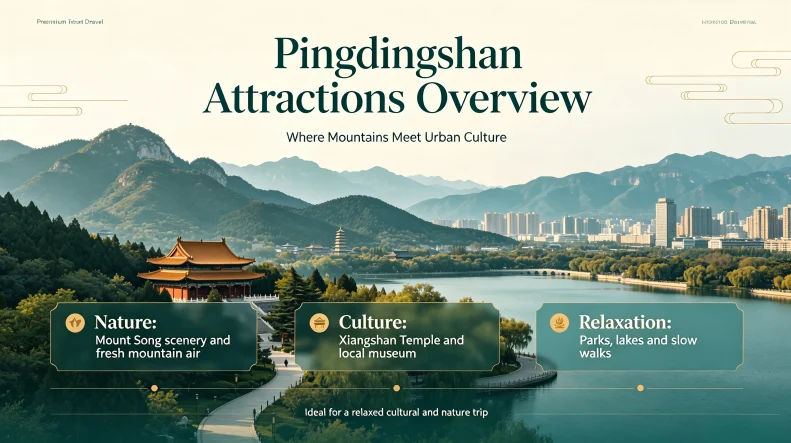
Pingdingshan’s tourism resources are highly concentrated. The core can be summarized as “one mountain (Yao Mountain), one Buddha (Zhongyuan Buddha), one temple (Xiangshan Temple), and one porcelain (Ru porcelain).” Yao Mountain is the absolute highlight, attracting visitors with its magnificent natural scenery. The Zhongyuan Buddha, at 208 meters, is the tallest in the world – truly awe‑inspiring. Xiangshan Temple is revered as the “ancestral home of Guanyin” in Chinese Buddhism. And the Baofeng Qingliang Temple Ru Kiln site preserves the memory of Ru porcelain – the first of the five great ceramics of the Song dynasty. Depending on your travel time and interests, you can choose 2–4 of them to combine.
Detailed Introduction to Must‑See Attractions
Yao Mountain Scenic Area – The Essence of the Funiu Mountains
Yao Mountain, also known as Stone Man Mountain, is a national 5A tourist attraction and a national geopark. Its main peak, Yuhuangding, is 2,153 meters (7,064 feet) above sea level – one of the main peaks of the Funiu Mountains. The area combines grandeur, danger, beauty, uniqueness, and serenity, with strange peaks, odd rocks, waterfalls, hot springs, and seas of clouds. It is often called the “Mount Huangshan of the Central Plains.”
Core highlights:
- Yuhuangding (Jade Emperor Peak): The highest summit of Yao Mountain. From the top, the view opens up to reveal rolling mountains and a sea of clouds. On clear days, you can see far across the Central Plains. This is a paradise for photographers, especially at sunrise and sunset.
- Stone Man Peak (Shiren Peak): A naturally formed giant rock shaped like a human figure – the landmark of Yao Mountain, which gave the mountain its former name. The peak looks like an ancient watchman, standing quietly among the mountains, telling stories of the ages.
- Nine‑Turn Waterfall: A waterfall that winds down the mountain with a drop of nearly 100 meters (328 feet). It flows all year round. During the rainy season, it is like a white silk ribbon hanging from the cliff, its thunderous roar echoing through the valley. In winter, the water freezes into crystal‑clear icefalls – a different kind of beauty.
- Silver Thread Waterfall: As its name suggests, this waterfall is thin and long like a silver thread, falling lightly from the cliff top – graceful and delicate. Its style is completely different from the Nine‑Turn Waterfall – one bold, one gentle, complementing each other.
- Red Maple Valley: The best place to see red maple leaves in autumn. From late October to mid‑November, the mountainside is covered with vibrant red foliage, contrasting with the strange peaks – a breathtaking sight. Walking through the valley feels like stepping into a colorful oil painting.
- Yao Mountain Hot Springs: Several natural hot springs are at the foot of the mountain. After a day of hiking, soaking in the hot springs is the perfect way to relax your muscles and end your Yao Mountain journey.
Practical information:
- Ticket: 80 RMB (peak season), 60 RMB (off‑season)
- Cable cars: Yao Mountain cable car, one-way 50 RMB, round-trip 80 RMB; Shiren Mountain cable car, one-way 40 RMB, round-trip 70 RMB.
- Opening hours: 8:00 – 17:30
- Recommended visit duration: 1–2 days
Why you must go: Yao Mountain is one of the most magnificent natural landscapes in Henan Province. It has the steepness of Mount Hua and the beauty of Mount Huangshan. It is ideal for outdoor enthusiasts and photographers.
Zhongyuan Buddha – The World’s Tallest Buddhist Statue
Zhongyuan Buddha is located in Lushan County, Pingdingshan, backed by Yao Mountain and facing the Sha River. It is the tallest Buddhist statue in the world. The total height is 208 meters (682 feet), with the Buddha’s body at 108 meters, the lotus base at 20 meters, the vajra base at 25 meters, and the sumeru base at 55 meters. Construction began in 2002, and the statue was consecrated in 2008 after six years of work.
Core highlights:
- Viewing the Buddha: The statue is solemn and compassionate, with a round, full face and half‑closed eyes looking down upon the world. It was built with 3,300 tons of copper, 108 kilograms of gold, and 15,000 tons of steel – an imposing sight. From any angle, the Buddha inspires a sense of peace and awe.
- Fo Quan Temple: A thousand‑year‑old temple at the foot of the Buddha, first built in the Tang dynasty. The temple has ancient trees, solemn halls, and thriving incense. You can visit the temple first, then climb the steps to the Worship Platform.
- Tianrui Auspicious Bell: Weighing 116 tons, one of the largest bronze bells in the world. Its deep, resonant sound is said to bring blessings when struck three times.
- Worship Platform: The best place to see the Buddha up close. From here, every detail is clearly visible – from the gesture of the hands to the texture of the robe – all reflecting exquisite sculpture.
Practical information:
- Ticket: 120 RMB (includes Fo Quan Temple and Worship Platform)
- Opening hours: 8:00 – 17:30
- Recommended visit duration: 2–3 hours
Why you must go: Zhongyuan Buddha is a marvel of Buddhist faith. Its scale is extraordinary and significant for understanding contemporary Chinese Buddhist culture and sculpture.
Xiangshan Temple – The Ancestral Home of Guanyin
Xiangshan Temple is located in the New District of Pingdingshan City. It was first built in the Eastern Han dynasty, with a history of over 1,800 years – one of the earliest Buddhist temples in China and revered as the “ancestral home of Guanyin.” Buddhist scriptures say that the Bodhisattva Guanyin achieved enlightenment here, so it holds a high status among Buddhist believers.
Core highlights:
- Site of Guanyin’s Enlightenment: Legend says that Guanyin practiced and attained enlightenment here. The Guanyin Hall enshrines a statue of the bodhisattva, drawing many pilgrims.
- Ancient architecture: The temple includes the Grand Hall, Guanyin Hall, Heavenly King Hall, and more. The buildings are simple and dignified, with flying eaves, bracket sets, and painted beams – showcasing the superb craftsmanship of ancient architecture.
- Thousand‑year‑old pagoda: A stone pagoda from the Song dynasty with fine carvings – an important relic for studying Song‑dynasty architecture and stone carving.
Practical information:
- Ticket: 30 RMB
- Opening hours: 8:00 – 17:00
- Recommended visit duration: 1.5–2 hours
Why you must go: For those interested in Buddhist culture and history, Xiangshan Temple is the origin of Guanyin worship – well worth a special visit.
Baofeng Qingliang Temple Ru Kiln Site – The Birthplace of Ru Porcelain
The Baofeng Qingliang Temple Ru Kiln site is the kiln site of the Ru kiln, the first of the five great famous kilns of the Song dynasty. Ru porcelain is known for its “sky‑blue” glaze and “cicada‑wing” crackle patterns, and it was treasured by imperial households throughout history. The saying “Even a fortune of ten thousand gold pieces is not worth a single piece of Ru porcelain” has been passed down to this day.
Core highlights:
- Kiln site display: You can see ancient kilns, workshops, and other relics – a direct view of Song‑dynasty ceramic production. Standing among the ruins, you can almost imagine the busy scenes of ancient times.
- Ru Porcelain Museum: Displays exquisite Ru pieces and restored artifacts, systematically showing the craftsmanship, historical evolution, and cultural value of Ru porcelain. The sky‑blue glaze is as warm as jade, and the cicada‑wing crackles are delicate and natural – every piece is remarkable.
Practical information:
- Ticket: Free (reservation required in advance)
- Opening hours: 9:00 – 17:00 (closed on Mondays)
- Recommended visit duration: 1.5–2 hours
Why you must go: For ceramic enthusiasts, this is the birthplace of Ru porcelain – one of the holy sites of Chinese ceramic art. Even if you are not a specialist, you will be moved by the beauty of Chinese porcelain here.
Pingdingshan Museum
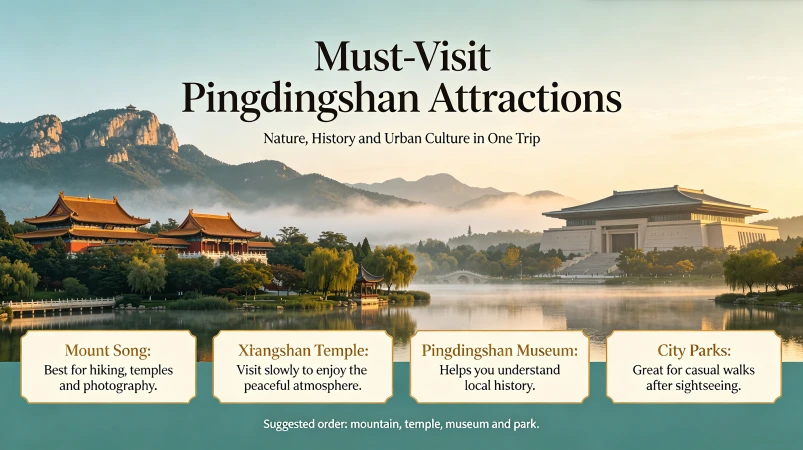
Pingdingshan Museum is a national second‑level museum, displaying the history and culture of the Pingdingshan area from ancient times to the present.
Core highlights: Exquisite jade and bronze artifacts from the Ying Kingdom tombs; Tang and Song ceramics showing the region’s ceramic craftsmanship; and an exhibition on Pingdingshan’s coal industry history, recording the city’s modern rise.
Practical information: Free; reservation required in advance. Visit duration: about 1.5 hours.
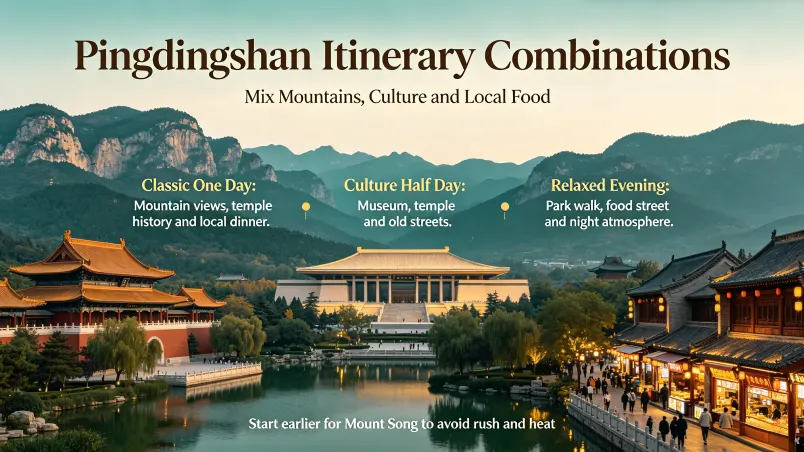
Suggested Itineraries for Pingdingshan
2‑Day Classic Tour (Yao Mountain + Zhongyuan Buddha)
- Day 1: Arrive at Yao Mountain in the morning. Take the cable car up to visit Yuhuangding, Stone Man Peak, and Nine‑Turn Waterfall. In the afternoon, descend and check into a hot spring hotel to relax.
- Day 2: Morning: visit Zhongyuan Buddha – view the statue and Fo Quan Temple. Noon: have a local meal (Lan Guo Cai) in Lushan County. Afternoon: visit Xiangshan Temple (about 1.5 hours). Return in the evening.
3‑Day In‑Depth Tour (Yao Mountain + Buddha + Ru Porcelain + Xiangshan Temple)
- Day 1: Full day at Yao Mountain – explore Red Maple Valley, Silver Thread Waterfall, and more. Overnight at a hot spring hotel at the foot.
- Day 2: Morning: visit Zhongyuan Buddha. Afternoon: visit Baofeng Qingliang Temple, Ru Kiln site, and the Ru Porcelain Museum. Overnight in Pingdingshan City.
- Day 3: Morning: visit Xiangshan Temple. Afternoon: visit Pingdingshan Museum. Return in the evening.
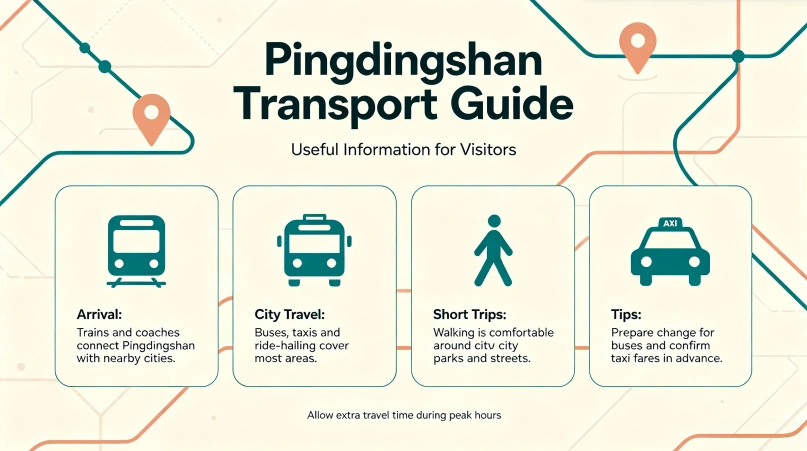
Transportation Guide for Pingdingshan
How to Get to Pingdingshan
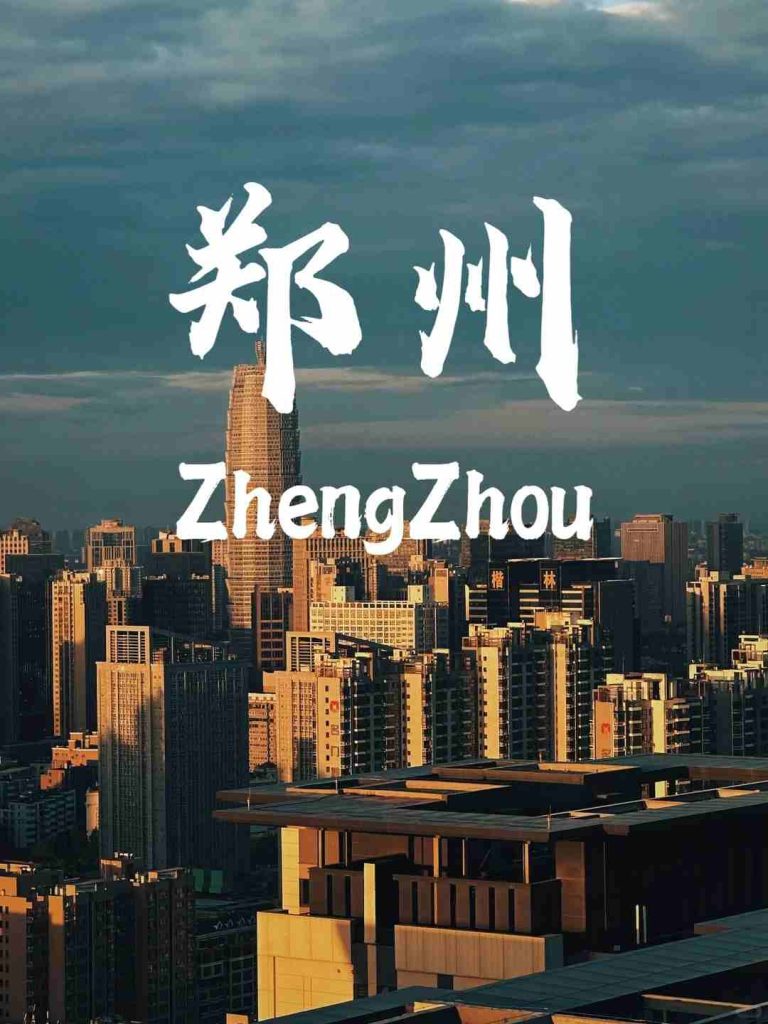
- High‑speed train/bullet train (most recommended): From Zhengzhou East Station, take a high‑speed train to Pingdingshan West Station (about 1 hour, fare about 60–80 RMB). After exiting, take a bus or taxi to Yao Mountain or Lushan County.
- Long‑distance bus: Zhengzhou Central Bus Station has buses to Pingdingshan (about 2.5 hours).
- Self‑drive: From Zhengzhou, take the Zhengzhou–Luanchuan Expressway to the Lushan exit – about 2 hours total.
Local transportation
- Pingdingshan city: Taxi starting fare 6–7 RMB; Didi Chuxing available. Bus fare 1 RMB.
- To Yao Mountain: Take the Yao Mountain tourist bus from Pingdingshan West Station (about 1.5 hours), or hire a car/Didi.
- To Zhongyuan Buddha: Taxi from Pingdingshan West Station – about 30 minutes.
- To Xiangshan Temple: Taxi from Pingdingshan city – about 20 minutes.
- To Baofeng Ru Kiln site: Taxi from Pingdingshan city – about 40 minutes.
Accommodation Recommendations
- Hot spring hotels at the foot of Yao Mountain: Such as Yao Mountain Fuquan Hot Spring Hotel, which includes hot springs, is the best choice for relaxing after hiking.
- Lushan county town: Mid‑range hotels about 150–300 RMB – good value.
- Pingdingshan City: Recommended areas – Xinhua District or Weidong District. International chains like Quanji and Hanting are available – prices 200–400 RMB.
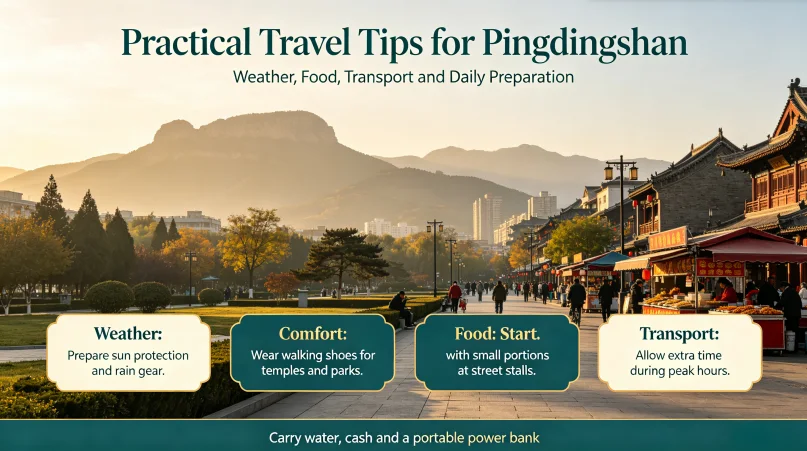
Practical Travel Tips for Pingdingshan
Language & Communication
Major signs at Pingdingshan and Yao Mountain have Chinese‑English labels, but most local restaurants and taxi drivers speak only Chinese. Download a translation app and save the offline pack.
Payment & Money
WeChat Pay and Alipay are widely accepted. Link an international credit card in advance. Carry a small amount of cash (200–300 RMB) for street vendors and emergencies.
Internet & SIM Cards
You can buy a short‑term SIM card (7–30 days) at Zhengzhou Airport or in Pingdingshan city using your passport.
Clothing & Gear
- Yao Mountain requires hiking – you must wear non‑slip hiking shoes or sports shoes.
- Summer: sun‑protective clothing, insect repellent, and plenty of water.
- Spring/Autumn: bring a light jacket – temperatures are lower at the summit.
- Winter: down jacket, gloves.
- Hiking poles are useful – you can rent them at the scenic area.
Safety & Health
- The hiking trails on Yao Mountain have railings, but some sections are steep – go at your own pace.
- Zhongyuan Buddha has many steps – walk slowly.
- It is recommended to purchase travel insurance covering accidental injury.
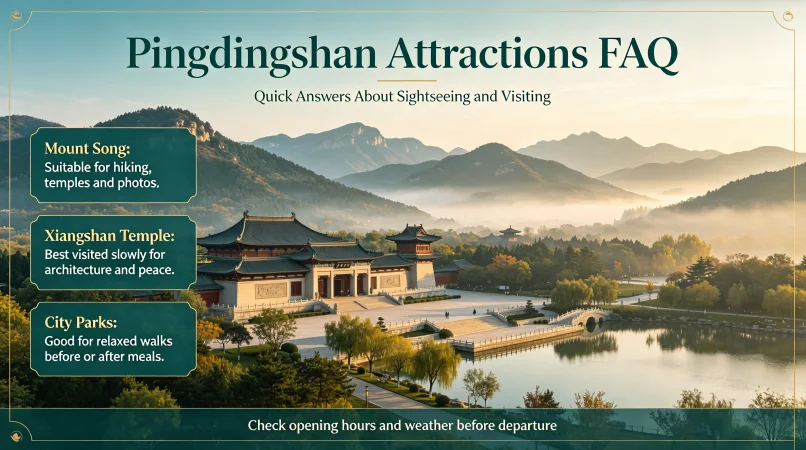
Frequently Asked Questions about Pingdingshan Attractions
Q: Which is better – Yao Mountain or Yuntai Mountain?
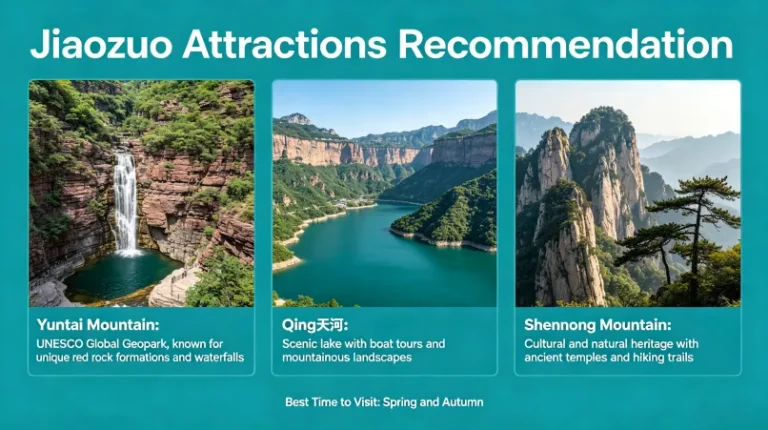
A: They are different. Yuntai Mountain is famous for its red‑rock gorge and waterfalls – more developed and easier to access. Yao Mountain is known for its high peaks, strange rocks, and cloud seas – more rugged and adventurous. Both are UNESCO Global Geoparks, and each has its own charm. If you are short on time, Yuntai Mountain is closer to Zhengzhou and more accessible. If you have more time and enjoy hiking, Yao Mountain offers a more memorable experience.
Q: How many days do I need for Pingdingshan?
A: At least 2 days for Yao Mountain and the Buddha. If you are also interested in Ru porcelain and Guanyin culture, add another day.
Q: Can I climb to the top of Zhongyuan Buddha?
A: No, but you can get close views from the Worship Platform and Fo Quan Temple – details are clearly visible.
Q: Are there English‑speaking guides in Pingdingshan?
A: Yao Mountain and Zhongyuan Buddha can arrange English guides in advance – check with Trip.com or local travel agencies.
Q: Is Pingdingshan suitable for children and the elderly?
A: Yao Mountain requires moderate physical effort, but you can take cable cars all the way up, and trails are well maintained. Zhongyuan Buddha, Xiangshan Temple, and the Ru Porcelain Museum are all suitable for family visitors – flat pathways and moderate walking intensity.
Pingdingshan is an underrated travel destination. From the strange peaks and cloud seas of Yao Mountain, to the majestic Zhongyuan Buddha, to the ancestral home of Guanyin at Xiangshan Temple, and to the elegant sky‑blue of Ru porcelain – it offers a dual charm of nature and culture. Compared to other popular Henan destinations, Pingdingshan is quieter, more primitive, and closer to the authentic heart of the Central Plains landscape.
Whether you are a hiker, a Buddhist devotee, or a ceramic art enthusiast, Pingdingshan will give you a unique and memorable travel experience. Start planning your Pingdingshan journey today!
Related Reading:
- Pingdingshan Food Guide 2026: Must-Try Noodles, Stews & Local Delicacies
- Pingdingshan Travel Guide 2026: Yaoshan Mountain, Giant Buddha & Itinerary
- Jiaozuo Attractions: Top 6 Must-Visit Places & Travel Guide 2026
- Jiaozuo Travel Guide 2026: Yuntai Mountain, Tai Chi Village & Itinerary
- Dengfeng Travel Guide 2026: Shaolin Temple, Mount Song & Itinerary
- Henan Travel Guide 2026: Itinerary, Attractions & Tips for Foreigners
- What is the Specialty of Henan Food? A Foreigner’s Guide to Henan Cuisine