
What is the Specialty of Henan Food? A Foreigner’s Guide to Henan Cuisine
What Makes Henan Food Unique?
Henan cuisine, known in China as “Yu cuisine,” is considered the mother of China’s eight major culinary traditions. As the birthplace of Central Plains culture, Henan cuisine has profoundly influenced culinary traditions across northern China and the nation as a whole. For international visitors, exploring Henan cuisine is a culinary journey that offers insight into the roots of Chinese food culture. This article will provide a detailed overview of what makes Henan cuisine unique, as well as the classic dishes you absolutely must try.
Characteristics of Henan Cuisine
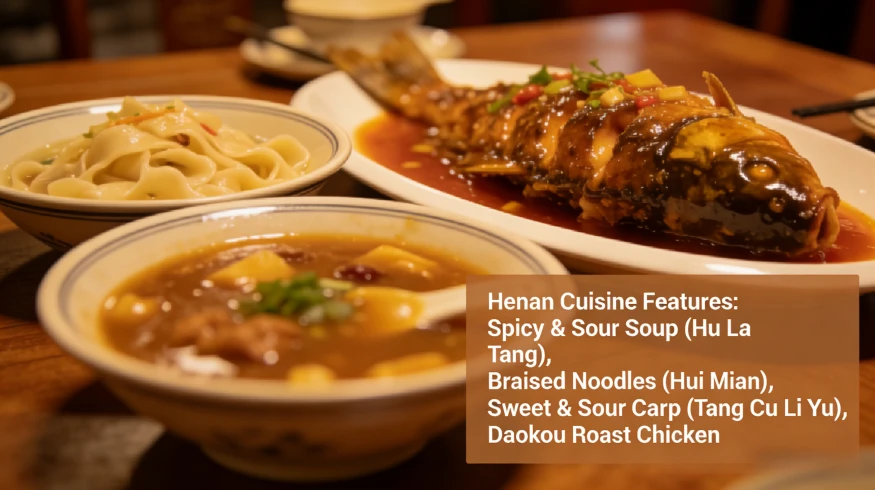
The essence of Henan cuisine can be summarized as follows: a moderate balance of saltiness and umami, a harmonious blend of the five flavors, a wide variety of ingredients, and meticulous attention to cooking time. Unlike the fiery spiciness of Sichuan cuisine or the light, delicate flavors of Cantonese cuisine, Henan cuisine seeks balance and harmony, embodying the Central Plains culture’s philosophy of moderation.
Characteristics of Henan Cuisine
1. Primarily Salty and Savory, with a Balance of Five Flavors
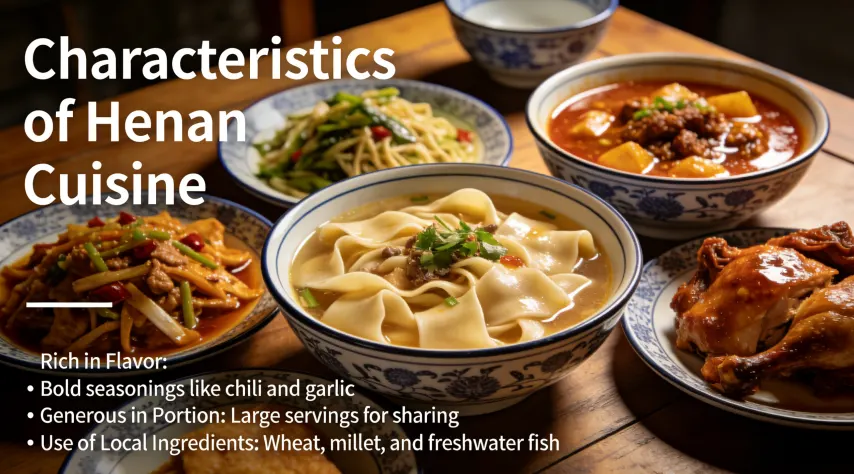
The most distinctive flavor of Henan cuisine is “salty and savory.” Chefs are skilled at using salt and soy sauce to bring out the natural flavors of ingredients, while skillfully blending sour, sweet, bitter, and spicy notes—yet ensuring that no single flavor overpowers the others. This is known as the “balance of five flavors” and is the soul of Henan cuisine.
2. A Focus on Wheat-Based Dishes with Endless Variations
Henan is one of China’s most important wheat-producing regions, so wheat-based dishes naturally take center stage on the dining table. From noodles to steamed buns, from dumplings to pancakes, the people of Henan have perfected the art of wheat-based cuisine.
3. A Culture of Soups and Broths: Rich and Nourishing
Henan people place great importance on soup. Whether it’s the spicy and sour soup for breakfast or the sour and spicy tripe soup and boiled meatball soup served at banquets, soup is an indispensable part of their diet. Henan chefs have a saying: “An opera singer’s voice, a chef’s soup,” which underscores the significance of soup.
4. Simple Ingredients, Meticulous Preparation
Henan cuisine primarily uses locally sourced ingredients: Yellow River carp, goat, wheat, and various vegetables. Though the ingredients are humble, the cooking process is highly refined, with meticulous attention to knife skills, heat control, and seasoning.
5. A Coexistence of Banquet Cuisine and Street Snacks
Henan boasts both banquet dishes with a long history and a strong sense of ceremony, such as the “Luoyang Water Banquet,” as well as street snacks found everywhere, brimming with the vibrancy of everyday life. These two styles together form the complete picture of Henan cuisine.
Must-Try Henan Delicacies
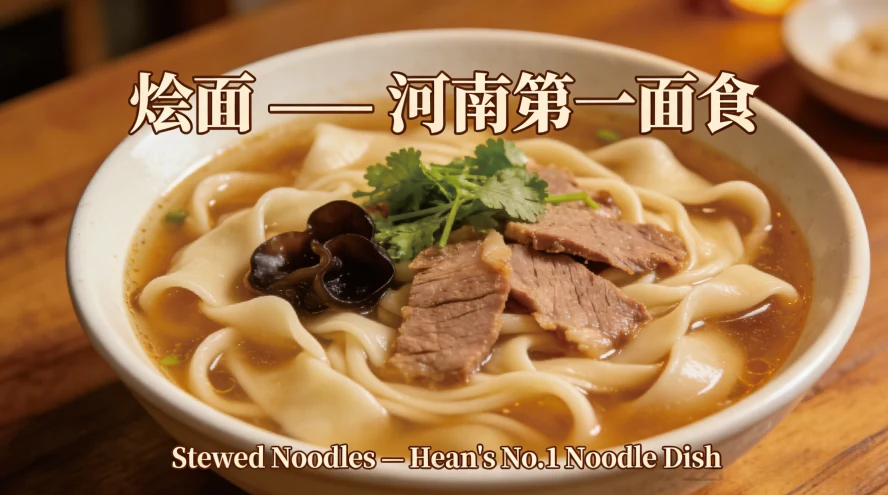
1. Huimian — Henan’s Premier Noodle Dish
What It Is: Huimian is Henan’s most famous noodle dish. Wide noodles are immersed in a rich, milky-white mutton broth that has been simmered for hours, resulting in a deep, savory flavor. The bowl typically includes wood ear mushrooms, dried tofu skin, glass noodles, and a few pieces of lamb.
Taste and Texture: The noodles are chewy and resilient, the broth is savory and rich, and the toppings add layers of complexity. One bowl leaves you feeling warm and satisfied.
Where to Eat: In Zhengzhou, the most famous spots are “Heji Hui Mian” and “Xiaoji Sanxian Hui Mian.” You can find dedicated Hui Mian restaurants in major cities throughout Henan.
Ordering Tips: A standard bowl is usually enough for one person. You can ask for a dash of chili oil and vinegar to enhance the flavor.
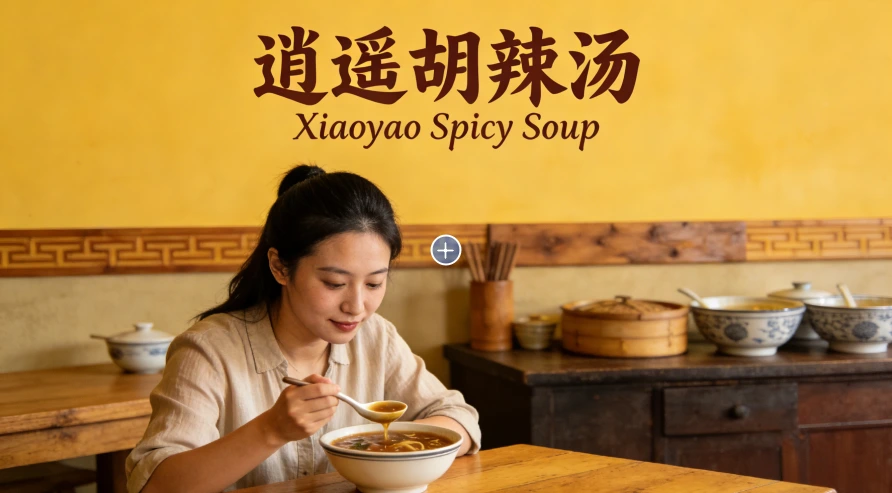
2. Hulatang — A Refreshing Breakfast
What it is: This is Henan’s most popular breakfast soup, particularly prevalent in the Zhengzhou and Zhoukou areas. The thick broth contains wheat gluten, slices of beef or lamb, wood ear mushrooms, daylily buds, and a variety of spices, with the core flavor coming from the heat of the pepper.
Taste and texture: The first sensation upon tasting is the intense spiciness of the pepper, followed by the complex aroma of the various spices. The soup is thick and rich in ingredients; drinking it warms the entire body and is incredibly invigorating.
Where to Try It: Zhengzhou’s most famous chain is “Fang Zhongshan Hulatang,” where long lines form daily at the flagship store. Opt for the “Premium Hulatang,” which has a moderate level of spiciness and pairs perfectly with fried dough sticks or pan-fried buns.
Note for International Visitors: The flavor may be quite intense; we recommend starting with the “mild” version.
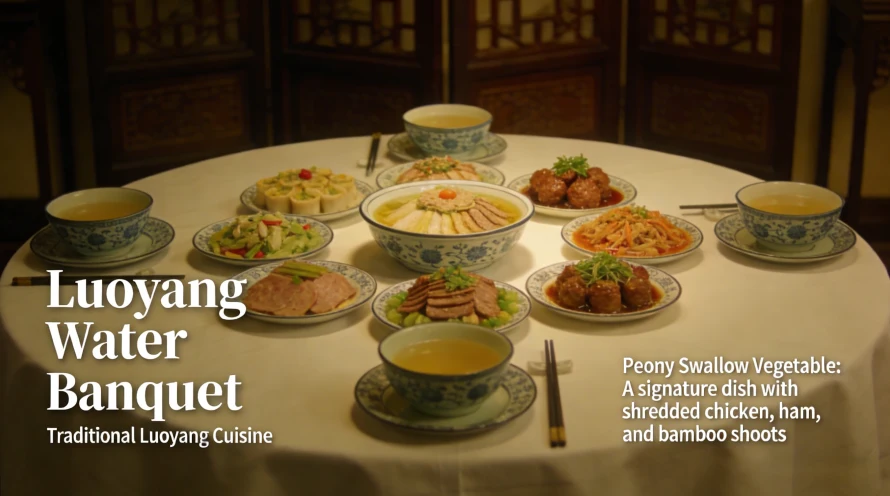
3. Luoyang Water Banquet — A Grand Banquet Experience
What it is: Originating in the Tang Dynasty, the Luoyang Water Banquet is Luoyang’s most renowned banquet format. The full course consists of 24 dishes, with cold plates, hot dishes, and soups served in alternating courses, flowing continuously like a stream. Because the dishes contain a lot of broth and liquid, it is called the “Water Banquet.”
Classic Dishes: The first course is typically “Peony and Swallow,” meticulously crafted from shredded white radish into the shape of a peony flower and served with clear broth—a dish that is both exquisite and beautiful.
Where to Experience It: Luoyang’s “Zhenbutong” Restaurant is the most famous time-honored establishment for sampling the Water Banquet. Tourists need not order the full course; simply select a few representative dishes to try.
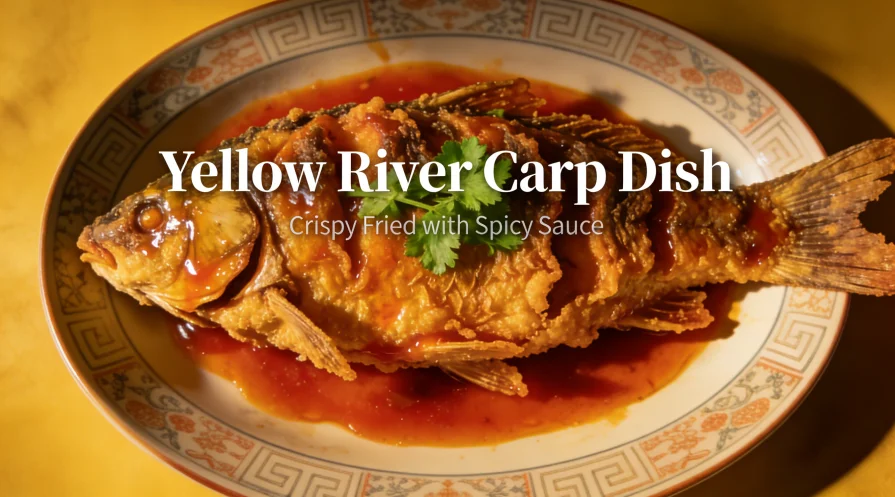
4. Yellow River Carp — A Gift from the Mother River
What It Is: Yellow River carp has long been regarded as a delicacy, with tender flesh and relatively few bones (compared to other carp varieties). Henan chefs excel at preparing “Sweet and Sour Braised Carp” or “Braised Carp in Soy Sauce.”
Taste and Texture: The sweet and sour version features a crispy skin and tender flesh, with a sweet-and-sour sauce that stimulates the appetite and cuts through the richness; the braised version boasts a rich, savory sauce that thoroughly infuses the fish with flavor.
Where to Eat: You can enjoy this dish at restaurants near the Zhengzhou Yellow River Scenic Area, as well as at long-established restaurants in the city specializing in Henan cuisine (such as “Awu Yellow River Carp”).
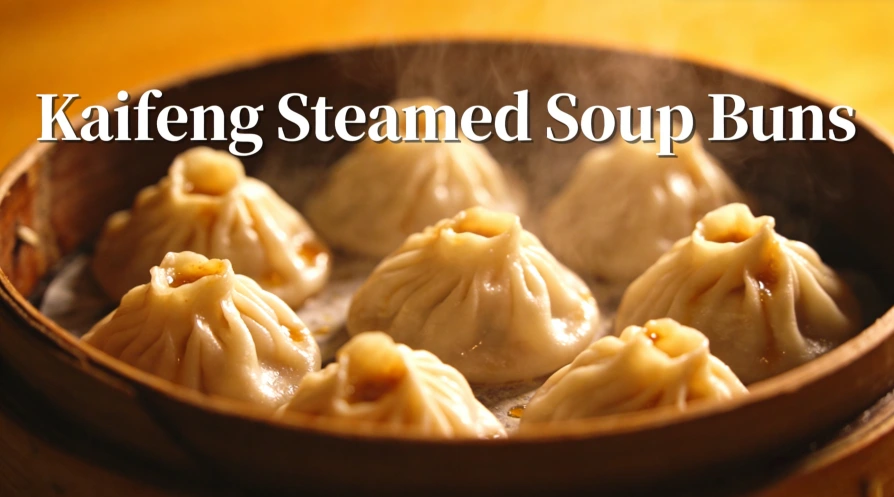
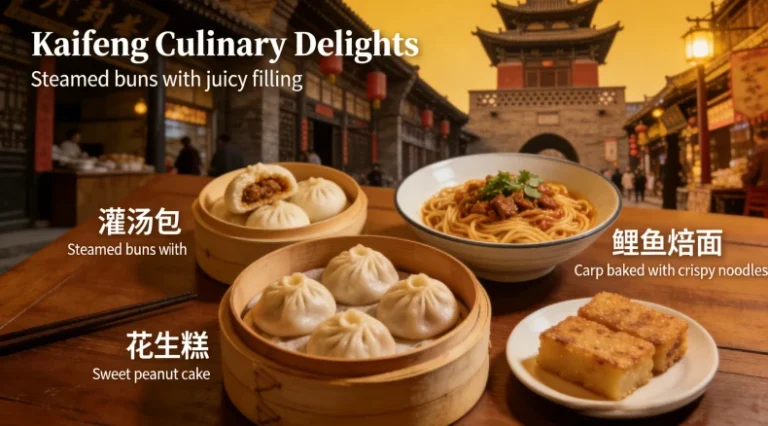
5. Kaifeng Soup Dumplings — Dumplings That Burst with Juice
What they are: Kaifeng soup dumplings are a standout example of Henan pastries. The dumpling wrappers are paper-thin, enveloping a savory meat filling and piping-hot broth.
How to eat them: Remember this mantra: “Lift gently, move slowly, make a small opening, sip the broth, then finish the dumpling”. First, gently lift the top of the dumpling with chopsticks and carefully transfer it to a spoon. Take a small bite to cool it down, then sip the broth before eating the dumpling.
Where to Eat: Kaifeng’s “Diyilou” and “Huangjia Laodian” are the two most famous establishments, with branches also in Zhengzhou.
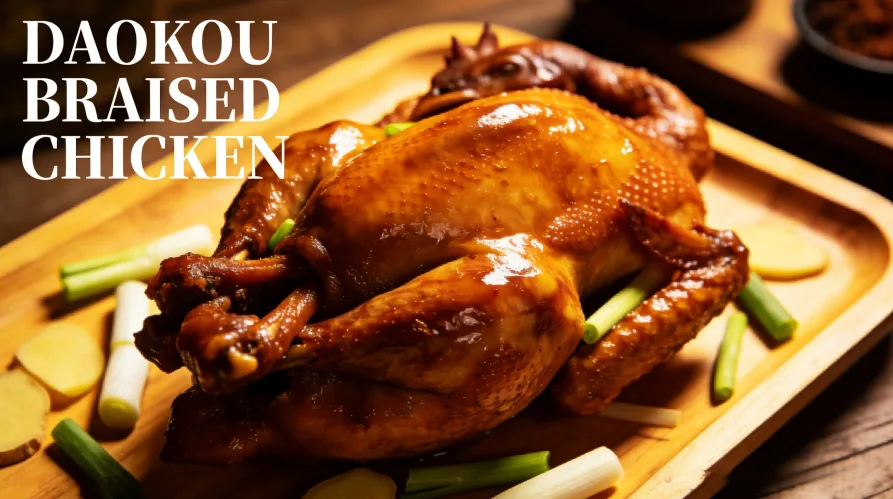
6. Daokou Roasted Chicken — A Roasted Chicken Rivaling Peking Duck
What it is: A famous roasted chicken from Daokou Town, Hua County, Anyang, with a history of over 300 years. It is characterized by its attractive shape (the chicken resembles an ingot), vibrant color, and tender meat with crispy bones.
Taste and Texture: Braised with a variety of spices and a rich, aged broth, it has a savory and aromatic flavor. The meat is extremely tender—a gentle shake is enough to separate the meat from the bone, making it easy for both the young and old to enjoy.
Where to Eat: Available at delicatessens and specialty shops in major cities across Henan; vacuum-packed versions also make excellent souvenirs.
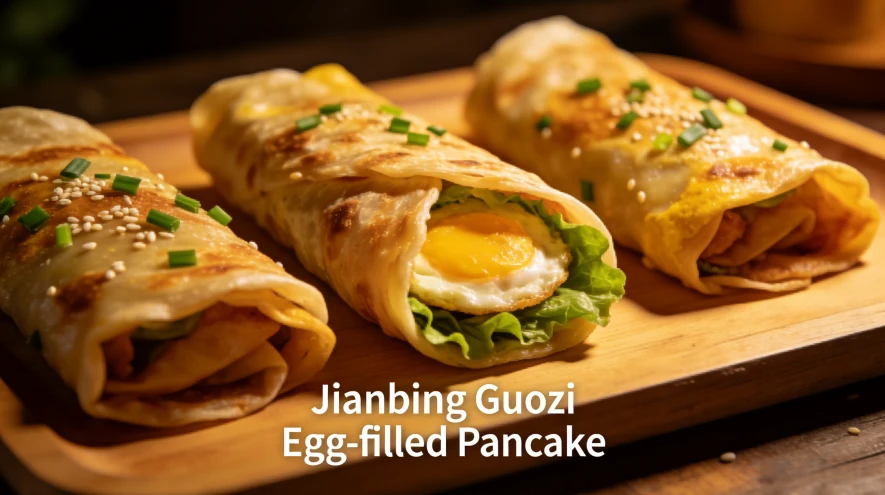
7. Jianbing Guozi & Egg-stuffed Pancake — The Kings of Street Breakfast
What They Are: Although originating in Tianjin and Xinyang, Henan, these dishes are widely popular throughout Henan. Jianbing Guozi consists of a thin mung bean flour crepe topped with an egg, crispy bits, and sauces; the Egg-stuffed Pancake involves pouring beaten egg into a pre-cooked pancake.
Where to eat: You’ll find these freshly made, steaming-hot breakfast stalls everywhere on the streets in the morning—a great way to experience local life.
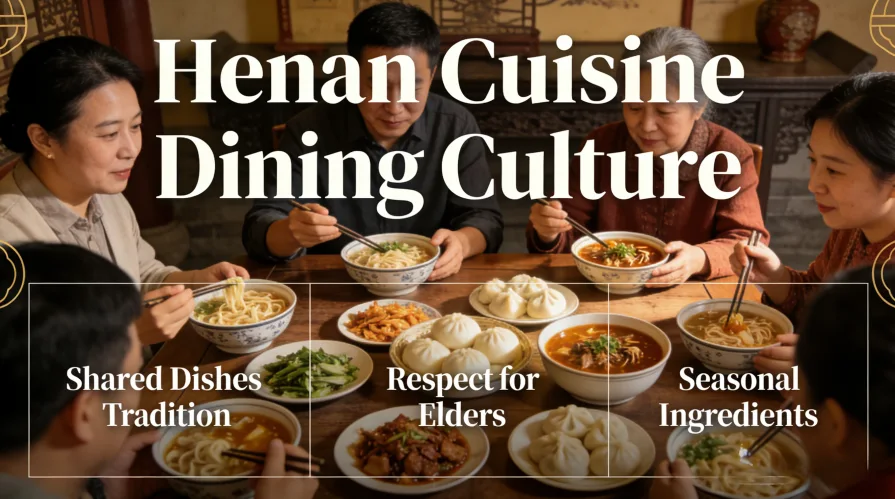
Dining Culture in Henan Cuisine
Table Etiquette
Round Tables and Sharing: Round tables are commonly used in Chinese restaurants, with dishes placed in the center for everyone to share. This is a way to foster camaraderie.
Ordering Habits: The host usually orders one or two extra dishes to show hospitality. If you are invited to a meal, wait for the host to signal before starting to eat.
Use of Cutlery: Mastering chopsticks is essential. Use a spoon for soup, and lift the bowl to bring it close to your mouth; do not bend over the bowl to eat.
Toasting Customs: When toasting at the table, it is customary to drink the entire glass in one go. As a foreigner, it is polite to explain that you have limited tolerance for alcohol; you will not be pressured to drink.
How to Order Food
Portion Guidelines: For one person, order one bowl of noodles and a side dish. For two or more people, order two to three dishes plus a staple food.
Taste Preferences: If you don’t like spicy food, say “no spice”; if you want to try local flavors, ask the server to recommend “local specialties.”
Best Dining Spots
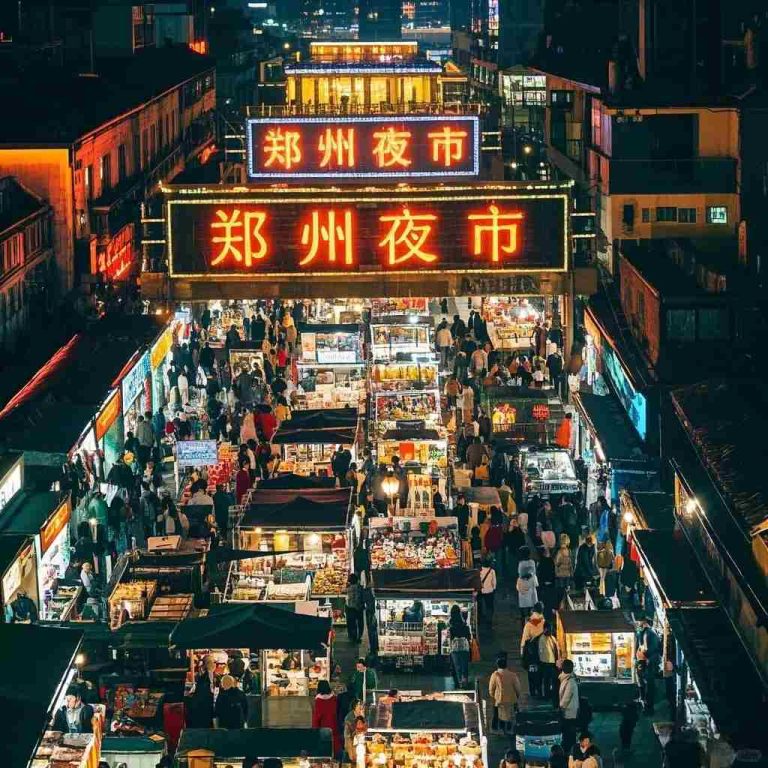
Zhengzhou: Jiankang Road Night Market, the area around Erqi Square, and the food court at Dennis Department Store.
Kaifeng: Gulou Night Market, Xisi Square Night Market, Bookstore Street.
Luoyang: Laocheng Cross Street, Luoyang Shuixiyuan.
Payment Methods
Most restaurants accept WeChat Pay and Alipay. Night market stalls may prefer cash, so it’s advisable to carry some small change.
Dietary Restrictions
Henan cuisine primarily uses pork, lamb, and chicken. If you have specific dietary requirements (such as halal or vegetarian), please mention them in advance. Vegetarians can choose stir-fried greens, tofu dishes, and noodle dishes.
Language Tips
Learning a few Chinese phrases will be helpful: “What is this?” (zhè shì shénme?), “How much is it?” (duōshǎo qián?), “It’s delicious” (hěn hǎochī).
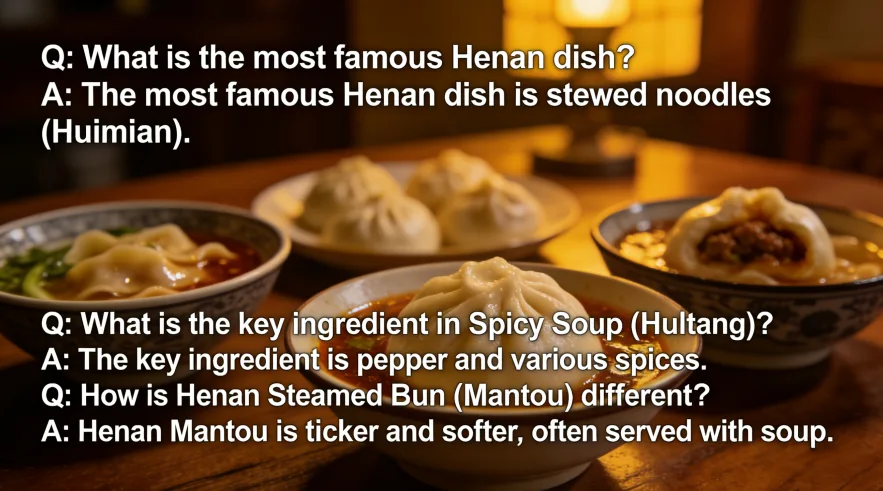
Frequently Asked Questions About Henan Cuisine
Q: Is Henan cuisine very spicy?
A: No. Henan cuisine is primarily salty and savory, and the spiciness usually comes from black pepper rather than chili peppers. For example, the spiciness in Hula Tang comes from black pepper, which differs from the numbing, spicy flavor of Sichuan cuisine. You can request “mild” or “no spice.”
Q: I’m a vegetarian. Will I be able to find enough to eat in Henan?
A: Yes. Stir-fried greens, shiitake mushrooms with Chinese broccoli, “Three Fresh Vegetables” (a stir-fry of eggplant, zucchini, and snow peas), various noodle dishes (such as vegetarian fried noodles), and tofu dishes are all excellent choices. When ordering, you can use a translation app to say, “I am a vegetarian.”
Q: What are some good local specialties to bring home from Henan?
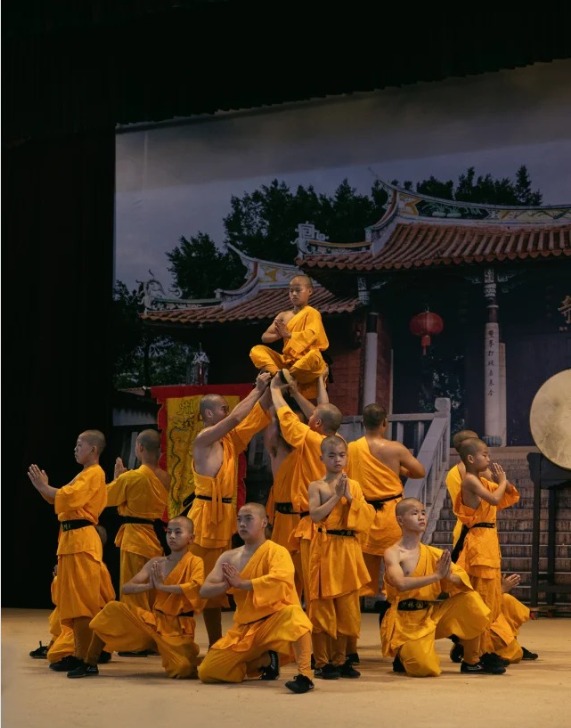
A: Daokou Roast Chicken (vacuum-packed), Xin Zheng red dates, Xinyang Maojian tea, Shaolin Temple vegetarian pastries, and peanut cakes (a specialty of Kaifeng).
Q: What drinks go well with Henan cuisine?
A: Local beers like “Jinxing Beer” are a good choice. You can also try Chinese baijiu (such as Du Kang), but be careful of its aftertaste. Of course, tea (jasmine tea or Xinyang Maojian) is a versatile pairing.
Henan cuisine may not be as internationally renowned as Sichuan or Cantonese cuisine, but its simple, rich, and heartwarming flavors perfectly reflect the character of the Central Plains. It is the root of Chinese culinary culture, with every bite embodying thousands of years of history and wisdom. When you set foot in Henan, whether you’re seated in a time-honored restaurant savoring an exquisite banquet or crowding around a night market stall to slurp down a bowl of noodles, you’re experiencing the most authentic and genuine flavors of China.
Enjoy your meal! (Zhù nín wèikǒu hǎo!) Bon appétit!
Related Reading:
- Zhengzhou famous food
- Zhengzhou Food Guide: Must-Try Dishes Like HuiMian & HuLaTang (2026)
- Zhengzhou to Luoyang Day Trip: Full Itinerary & Travel Guide for 2026
- Zhengzhou Shopping Guide 2026 Best Places, Markets & Tips for Foreigners
- Is Zhengzhou Worth Visiting? Honest 2026 Guide for Travelers
- Zhengzhou Transportation Guide 2026: Metro, DiDi & Tips for Foreigners